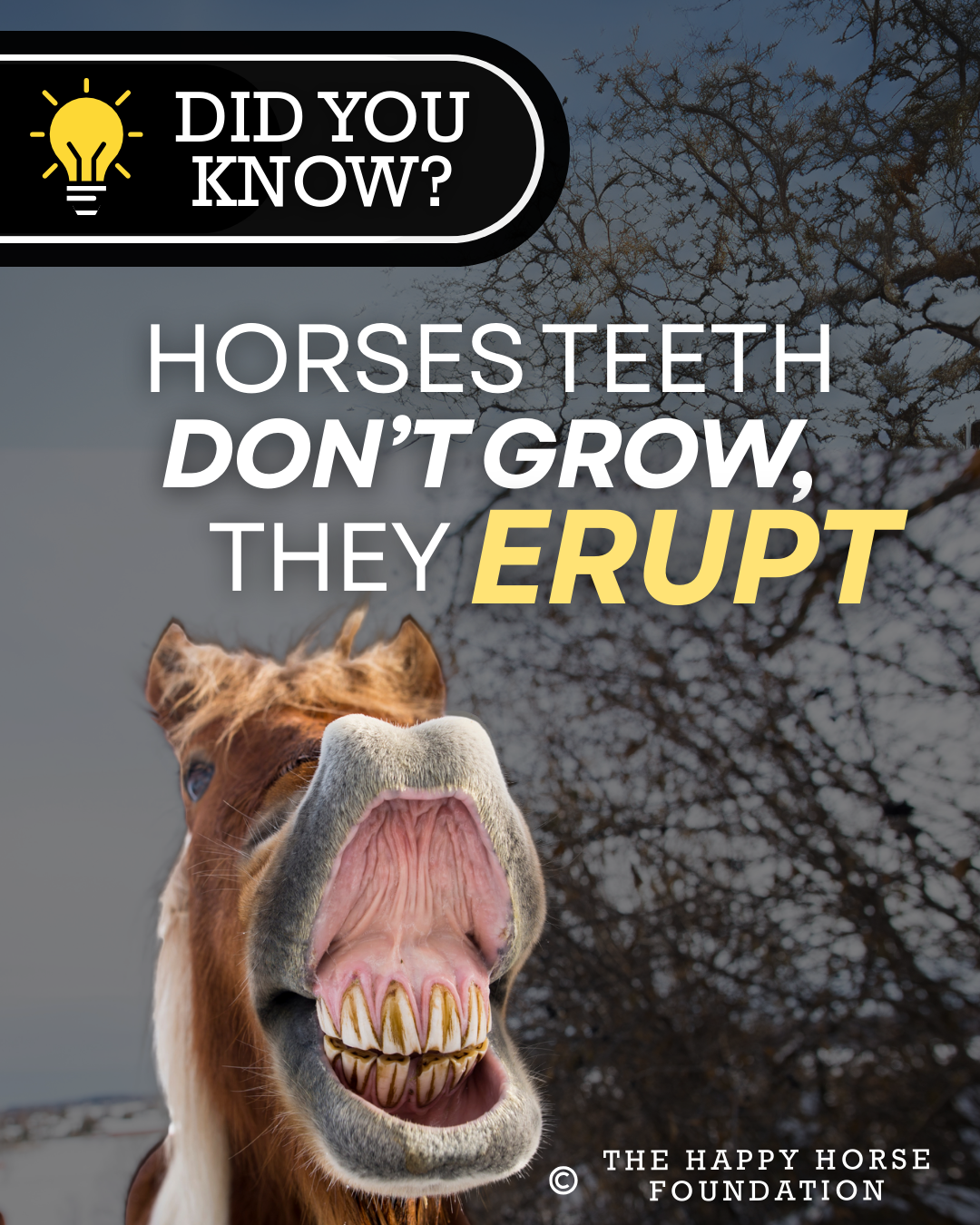
Horses teeth don’t grow, they erupt!
Horse teeth are quite different from ours. Their permanent teeth are fully formed within the jaw early in life – but only a small part is visible.
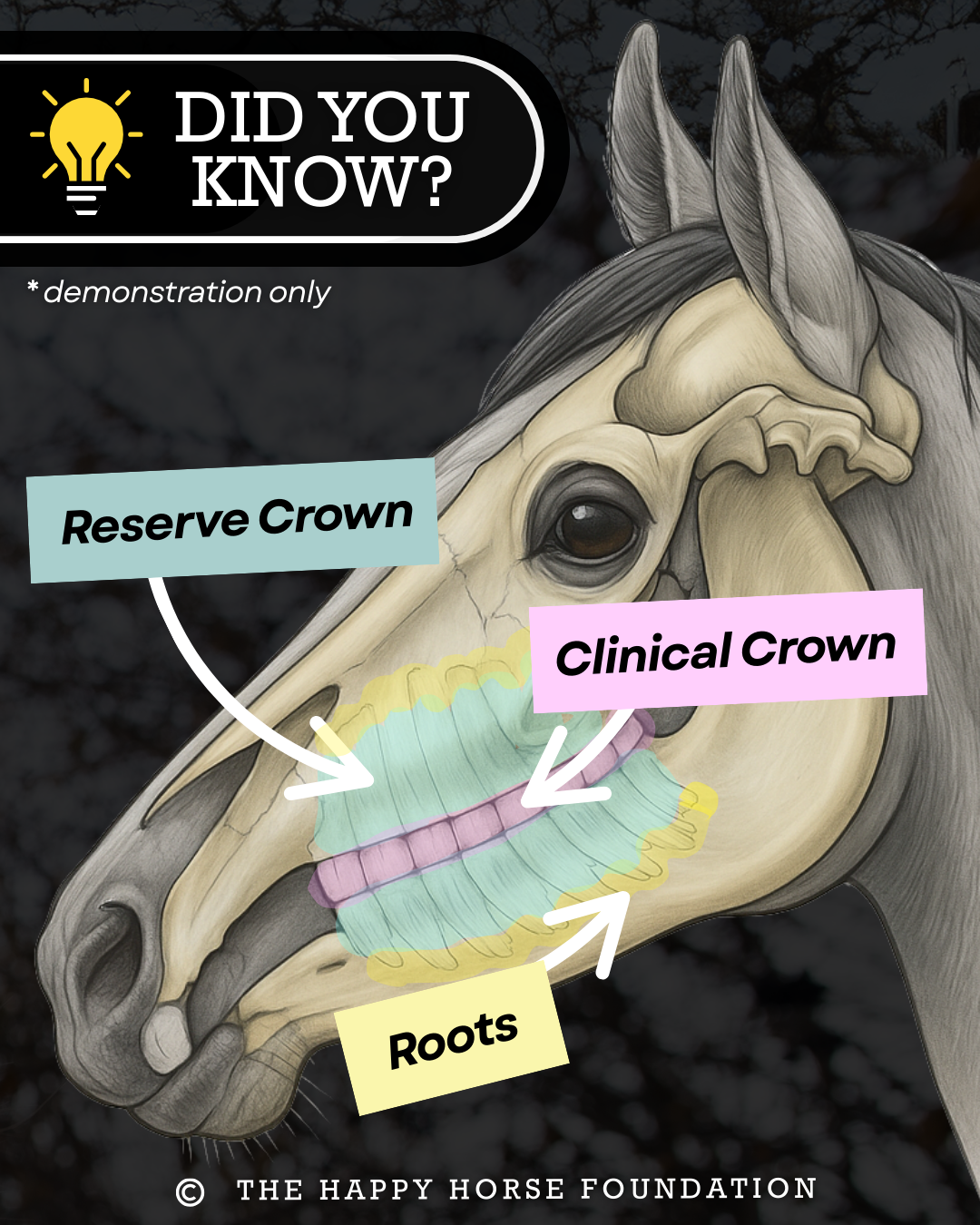
Each tooth has two sections (see diagram):
- Clinical crown; the exposed chewing surface you can see.
- Reserve crown; the large hidden portion stored in the jaw, which gradually erupts upward as the surface wears down.
Because horses graze and chew for many hours a day, their teeth erupt about 2–3 mm per year to replace what’s worn away.
Teeth across life stages
- Foals & young horses: Deciduous (“baby”) teeth erupt quickly, while permanent teeth are already forming deep in the jaw.
- Adults: Permanent teeth are in use, supported by a large reserve crown beneath the gum. Continuous eruption maintains a functional grinding surface.
- Older horses (late 20s–30s): The reserve is gradually used up. Once there’s no crown left to erupt, teeth become short, loose, or may even fall out.
When the reserve runs out
As horses age, dental challenges can include:
- Loose or missing teeth, making grazing difficult.
- Uneven wear, creating sharp enamel points, “wave mouth”, or step defects.
- Poor chewing efficiency, which increases the risk of choke, colic, or weight loss.
Why dental care matters
Equine dentistry isn’t just about filing sharp points. A proper exam should also assess:
- Tooth length and wear patterns
- Jaw alignment and chewing motion
- Signs of periodontal disease or root infection
As horse teeth don’t actually continuously grow, they don’t last forever. By understanding how eruption works and keeping up with regular dental care, we can help our horses stay comfortable, healthy, and able to chew effectively well into old age.
The Happy Horse Foundation is a registered charity with the Australian Charities and Not-for-profit Commission

The Happy Horse Foundation is a registered charity with the Australian Charities and Not-for-profit Commission

The Myth of the ‘Good Doer’ or ‘Easy Keeper’
The Myth of the ‘Good Doer’ or ‘Easy Keeper’ The Myth of the ‘Good Doer’ or ‘Easy Keeper’ Why everyday labels often hide discomfort in…
Read More
Pain ≠ Behaviour
Pain ≠ Behaviour Why everyday labels often hide discomfort in horses Pain in horses rarely looks the way we expect it to. It doesn’t always…
Read More
Gastric Ulcers in Horses
Gastric Ulcers in Horses How management, behaviour and biology interact to create ulcer risk How the horse’s digestive system functions A horse’s gastrointestinal tract is…
Read More