Did you know?
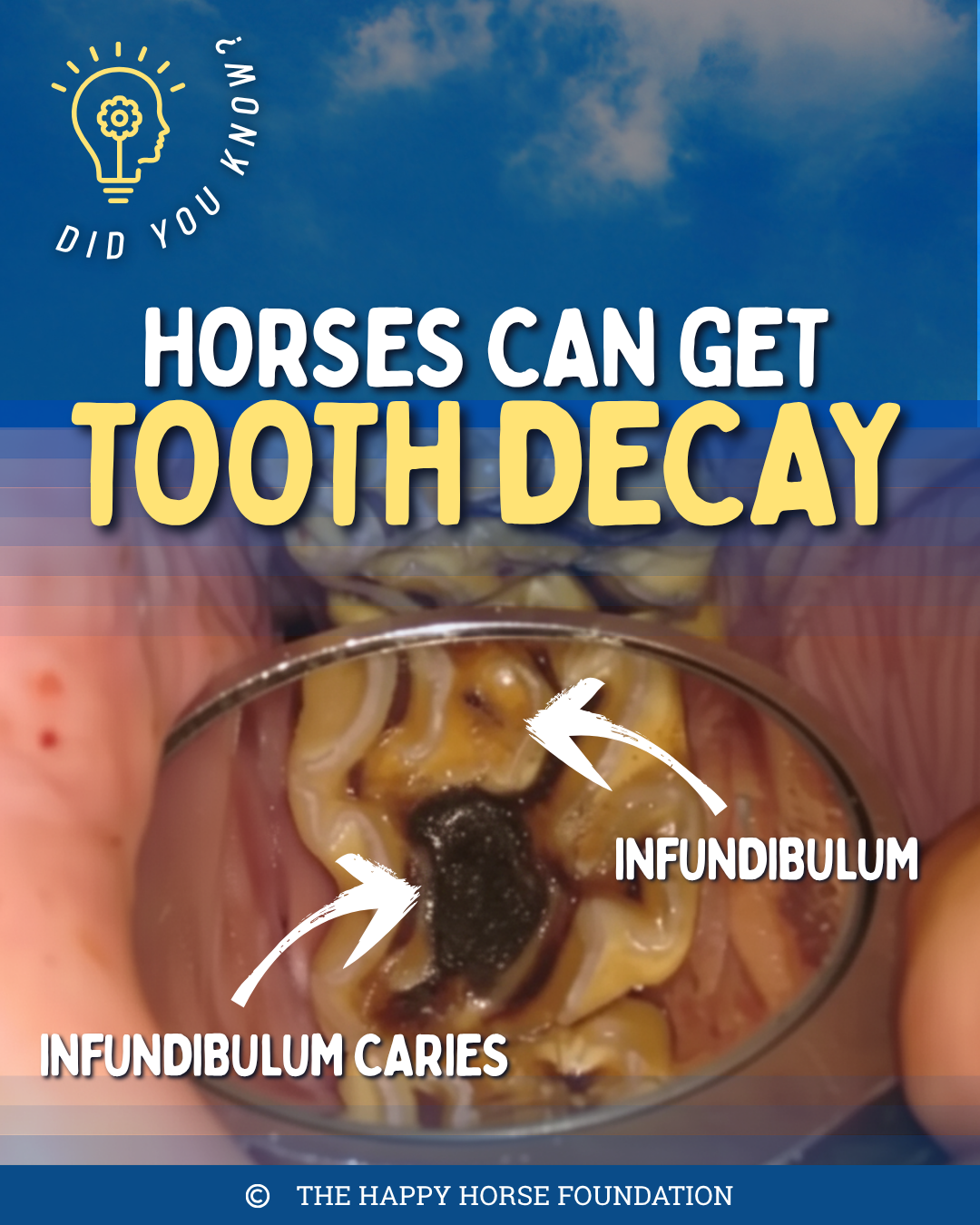
Horses can get tooth decay too!
Dental caries, or tooth decay, occur when bacteria break down food particles on the tooth surface, producing acids that soften and damage the enamel and underlying structures.
In horses, this most often affects the infundibulum – a cup-like structure in the upper cheek teeth – and is known as infundibular caries.
Decay can also occur in other areas:
- Peripheral caries affect the outer enamel surface of the teeth, often linked to high-sugar diets or reduced saliva flow.
- Smooth surface caries can develop on the sides of teeth, usually in horses with diet or bacterial imbalances.
- Secondary caries form around existing cracks, exposed dentine, or periodontal pockets.
Improve chewing efficiency and prevent weight loss.
Causes include:
- Food and debris trapped in the infundibulum or between teeth.
- Poor mineralisation of the tooth during development.
- Diets high in sugar or low in natural fibre.
- Inadequate saliva flow from limited chewing.
Signs to watch for:
- Foul breath.
- Quidding (dropping feed).
- Sensitivity when chewing or bitting.
- Facial swelling or sinus issues if infection spreads.
Treatment and management:
- Removal of decayed material and cleaning by a qualified equine dentist.
- Filling or sealing cavities in advanced cases.
- Adjusting the diet to increase natural fibre and chewing time.
- Routine dental exams to detect early changes before decay deepens.
Dental caries can weaken teeth and lead to fractures or infections, but with regular dental care, a fibre-rich diet, and plenty of chewing time, most cases can be prevented or managed before serious damage occurs.
The Happy Horse Foundation is a registered charity with the Australian Charities and Not-for-profit Commission

The Happy Horse Foundation is a registered charity with the Australian Charities and Not-for-profit Commission

The Myth of the ‘Good Doer’ or ‘Easy Keeper’
The Myth of the ‘Good Doer’ or ‘Easy Keeper’ The Myth of the ‘Good Doer’ or ‘Easy Keeper’ Why everyday labels often hide discomfort in…
Read More
Pain ≠ Behaviour
Pain ≠ Behaviour Why everyday labels often hide discomfort in horses Pain in horses rarely looks the way we expect it to. It doesn’t always…
Read More
Gastric Ulcers in Horses
Gastric Ulcers in Horses How management, behaviour and biology interact to create ulcer risk How the horse’s digestive system functions A horse’s gastrointestinal tract is…
Read More