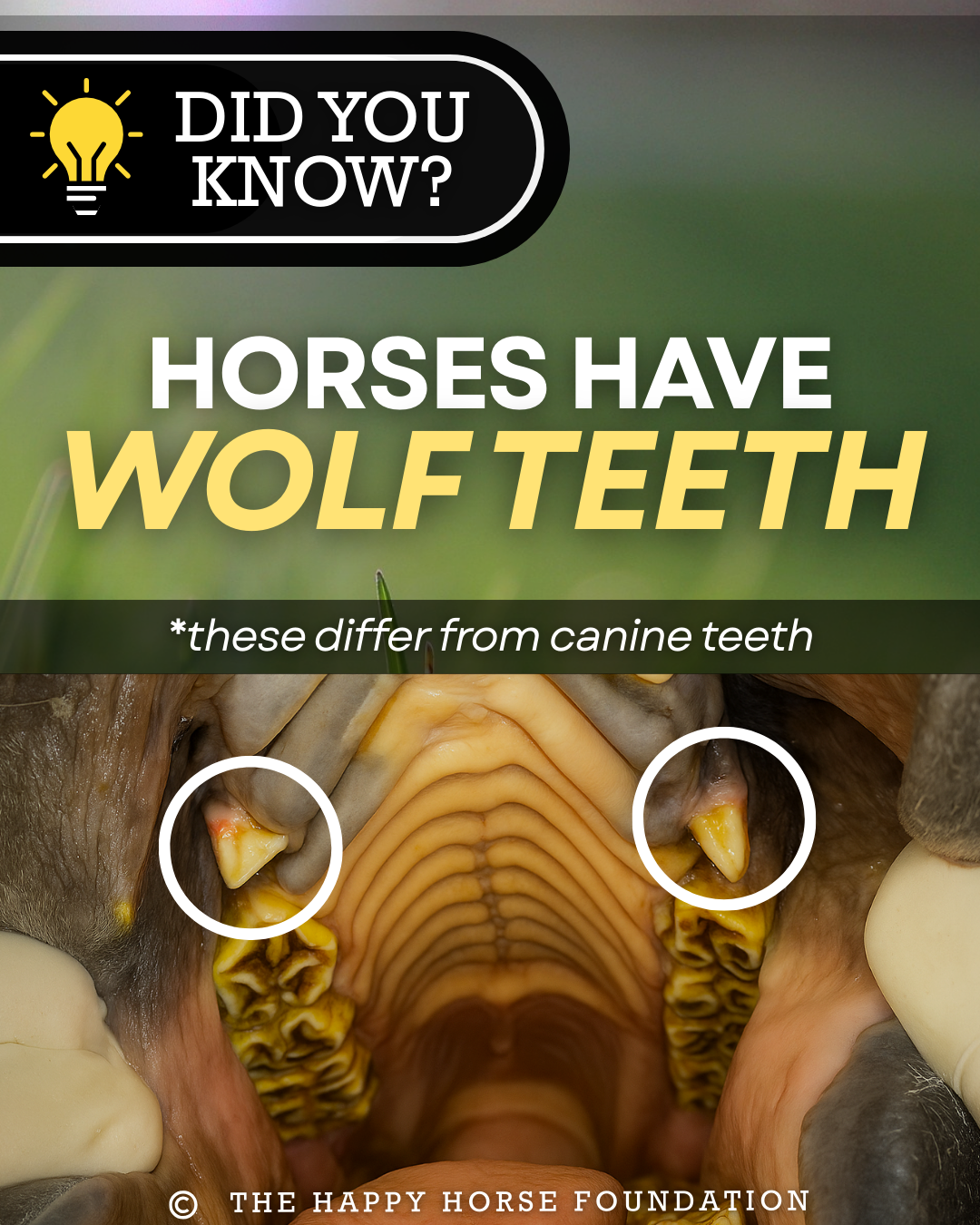
Did you know horses have wolf teeth?
Wolf teeth are small, vestigial premolars that sit just in front of the first cheek teeth (molars). They are often confused with canine teeth, but unlike canines – which are larger, sharper, and usually found in male horses – wolf teeth are small, peg-like, and positioned further back in the mouth, and actually more common in female horses.
Unlike the larger grinding molars, wolf teeth don’t play a role in chewing – they are evolutionary leftovers, similar to wisdom teeth in humans.
Unlike the larger grinding molars, wolf teeth don’t play a role in chewing – they are evolutionary leftovers, similar to wisdom teeth in humans.
Wolf teeth usually erupt between 6-18 months of age, and not every horse develops them. When present, they can appear as:
- Small, peg-like teeth (most commonly on the upper jaw).
- Unilateral (on one side only) or bilateral (on both sides).
- Occasionally unerupted, lying just beneath the gum surface (“blind wolf teeth”).
For most horses, wolf teeth cause no problems, however, in some cases they can:
- Interfere with the bit, especially if they’re positioned forward or at an angle.
- Lead to bitting discomfort, head tossing, or resistance.
- Cause gum irritation if unerupted or partially covered.
This is why many young horses have wolf teeth removed before bitting training. Extraction is a simple procedure when performed early, and it prevents possible issues later in life.
By understanding wolf teeth and assessing them for overall wellbeing, and before introducing a bit, we can improve young horses’ comfort and set the stage for positive training experiences.
The Happy Horse Foundation is a registered charity with the Australian Charities and Not-for-profit Commission

The Happy Horse Foundation is a registered charity with the Australian Charities and Not-for-profit Commission

The Myth of the ‘Good Doer’ or ‘Easy Keeper’
The Myth of the ‘Good Doer’ or ‘Easy Keeper’ The Myth of the ‘Good Doer’ or ‘Easy Keeper’ Why everyday labels often hide discomfort in…
Read More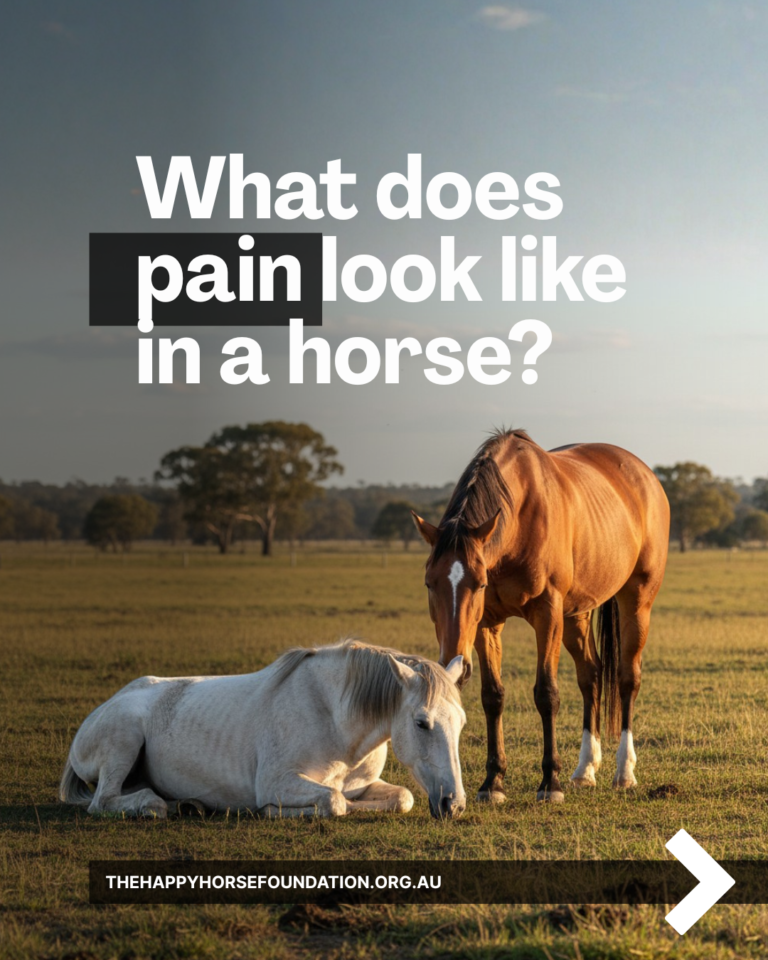
Pain ≠ Behaviour
Pain ≠ Behaviour Why everyday labels often hide discomfort in horses Pain in horses rarely looks the way we expect it to. It doesn’t always…
Read More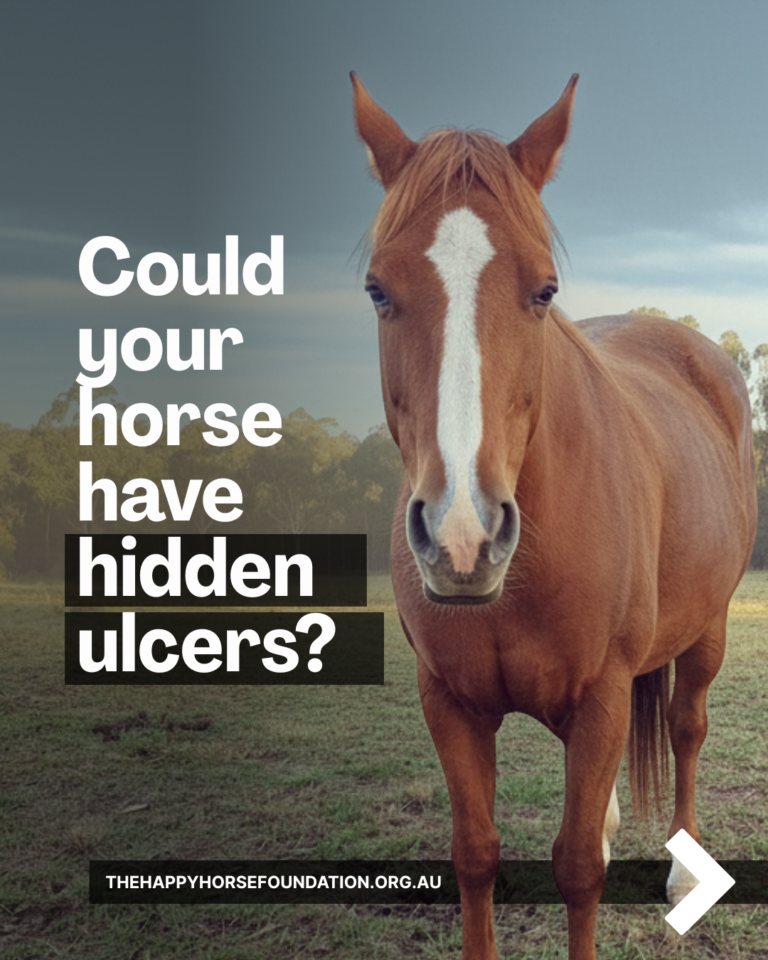
Gastric Ulcers in Horses
Gastric Ulcers in Horses How management, behaviour and biology interact to create ulcer risk How the horse’s digestive system functions A horse’s gastrointestinal tract is…
Read More