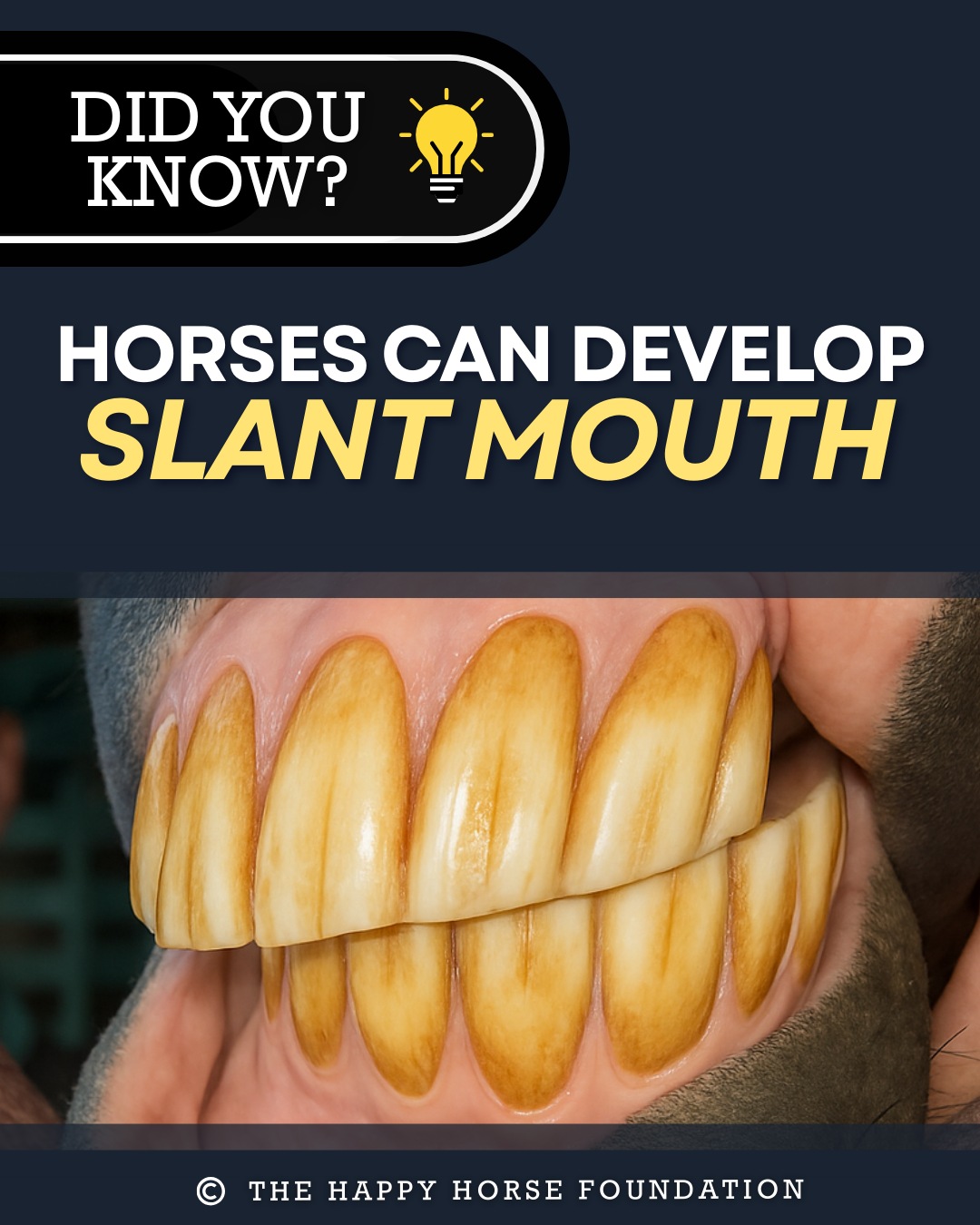
Did you know? Horses can develop slant mouth!
Slant mouth, also called diagonal bite, is an uneven wear pattern of the incisors where one side of the incisor row is longer than the other. Instead of meeting evenly, the biting surface slopes diagonally. This imbalance is usually caused by uneven chewing patterns, jaw misalignment, or missing opposing teeth.
Slant mouth can lead to problems such as:
- Difficulty grazing or tearing forage.
- Extra strain on the jaw joint from uneven pressure.
- Secondary imbalances in the cheek teeth (molars) as the horse compensates.
The best prevention is to provide horses with fibrous forage such as long-stem pasture or hay for most of the day, which promotes even wear across both sides of the mouth. Regular dental exams help detect early unevenness, and careful correction may be required if the slope becomes too pronounced. If slant mouth develops despite a fibre-rich diet, dental intervention may be necessary.
By supporting natural chewing with appropriate forage and monitoring incisors during dental checks, we can prevent slant mouth from worsening.
The Happy Horse Foundation is a registered charity with the Australian Charities and Not-for-profit Commission

The Happy Horse Foundation is a registered charity with the Australian Charities and Not-for-profit Commission

The Myth of the ‘Good Doer’ or ‘Easy Keeper’
The Myth of the ‘Good Doer’ or ‘Easy Keeper’ The Myth of the ‘Good Doer’ or ‘Easy Keeper’ Why everyday labels often hide discomfort in…
Read More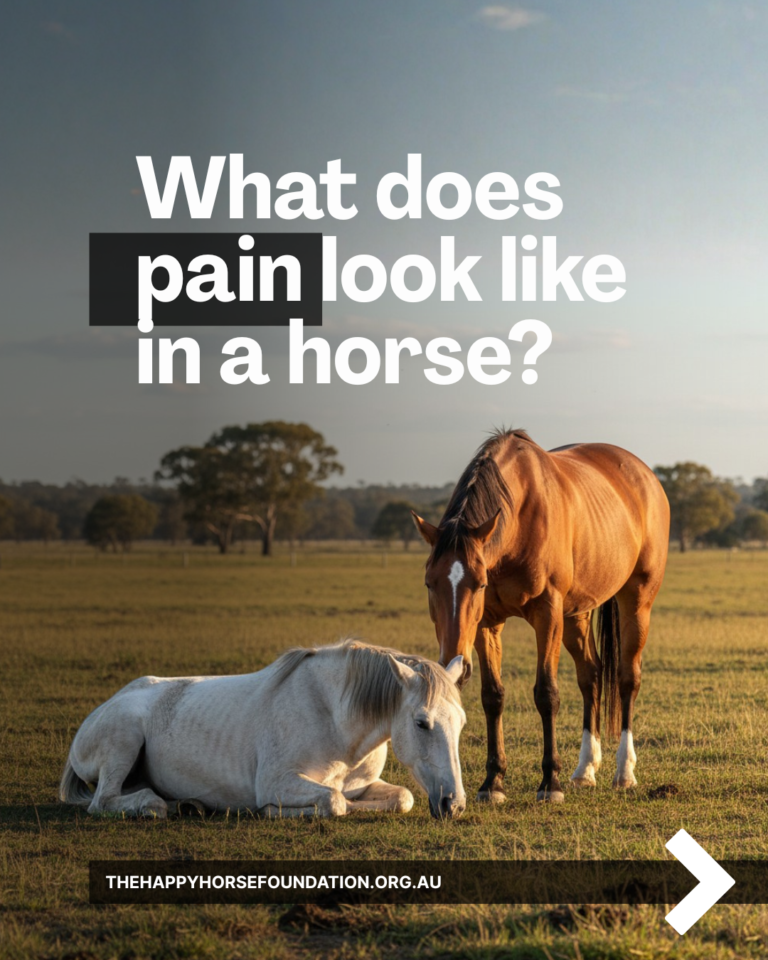
Pain ≠ Behaviour
Pain ≠ Behaviour Why everyday labels often hide discomfort in horses Pain in horses rarely looks the way we expect it to. It doesn’t always…
Read More
Gastric Ulcers in Horses
Gastric Ulcers in Horses How management, behaviour and biology interact to create ulcer risk How the horse’s digestive system functions A horse’s gastrointestinal tract is…
Read More