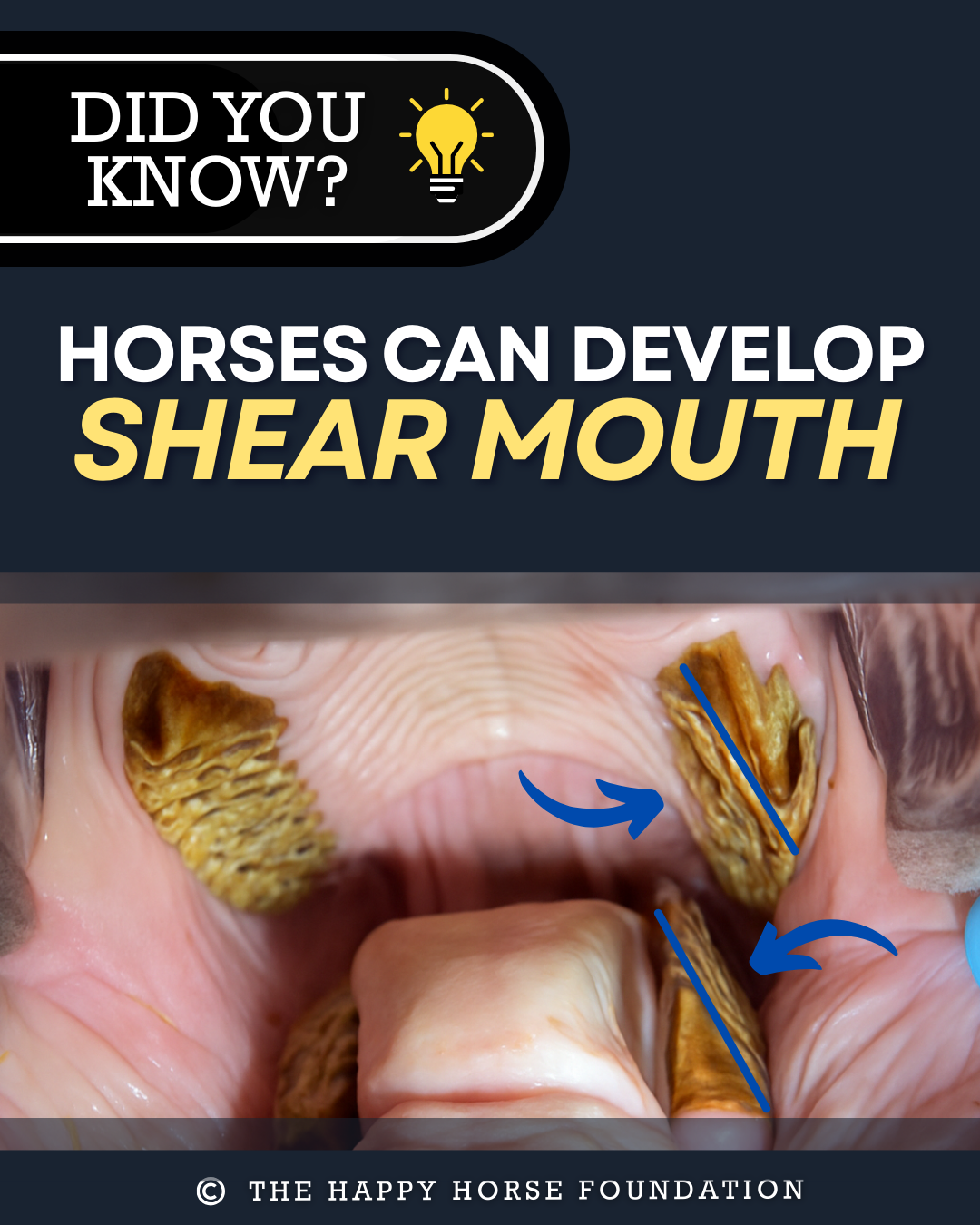
Did you know? Horses can develop shear mouth!
Shear mouth is one of the more severe dental malocclusions that can occur in horses. It occurs when the cheek teeth (molars) wear down at a steep angle, creating sharp, scissor-like edges rather than a flat grinding surface.
This condition is usually linked to long-standing uneven wear or restricted chewing motion that prevents normal side-to-side grinding.
Shear mouth can cause significant issues such as:
- Difficulty chewing and breaking up fibrous forage.
- Sharp edges cutting into the cheeks or tongue, causing ulcers and pain, possibly leading to infection.
- Inefficient digestion, leading to weight loss and poor condition.
- Resistance being handled or ridden due to oral discomfort.
Preventing shear mouth begins with diet. A species-appropriate, fibre-rich diet encourages natural grinding and helps maintain balanced tooth wear. Horses grazing or eating long-stem forage for many hours daily are far less likely to develop this problem.
Dental exams remain important, as shear mouth often requires careful and repeated floating (filing) to gradually correct the angle. But just as with other malocclusions, dentistry should complement – not replace – the foundation of proper nutrition and natural chewing opportunities.
By prioritising diet and natural wear, and using dentistry to support when needed, we can reduce the risk of shear mouth and keep horses chewing comfortably throughout their lives.
The Happy Horse Foundation is a registered charity with the Australian Charities and Not-for-profit Commission

The Happy Horse Foundation is a registered charity with the Australian Charities and Not-for-profit Commission

The Myth of the ‘Good Doer’ or ‘Easy Keeper’
The Myth of the ‘Good Doer’ or ‘Easy Keeper’ The Myth of the ‘Good Doer’ or ‘Easy Keeper’ Why everyday labels often hide discomfort in…
Read More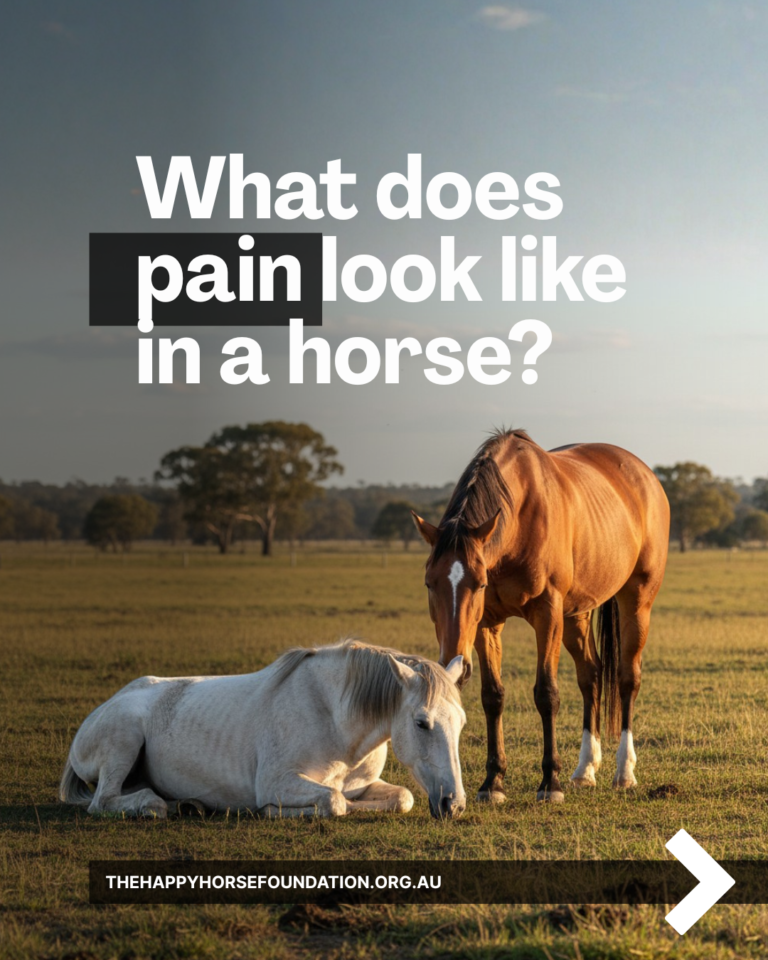
Pain ≠ Behaviour
Pain ≠ Behaviour Why everyday labels often hide discomfort in horses Pain in horses rarely looks the way we expect it to. It doesn’t always…
Read More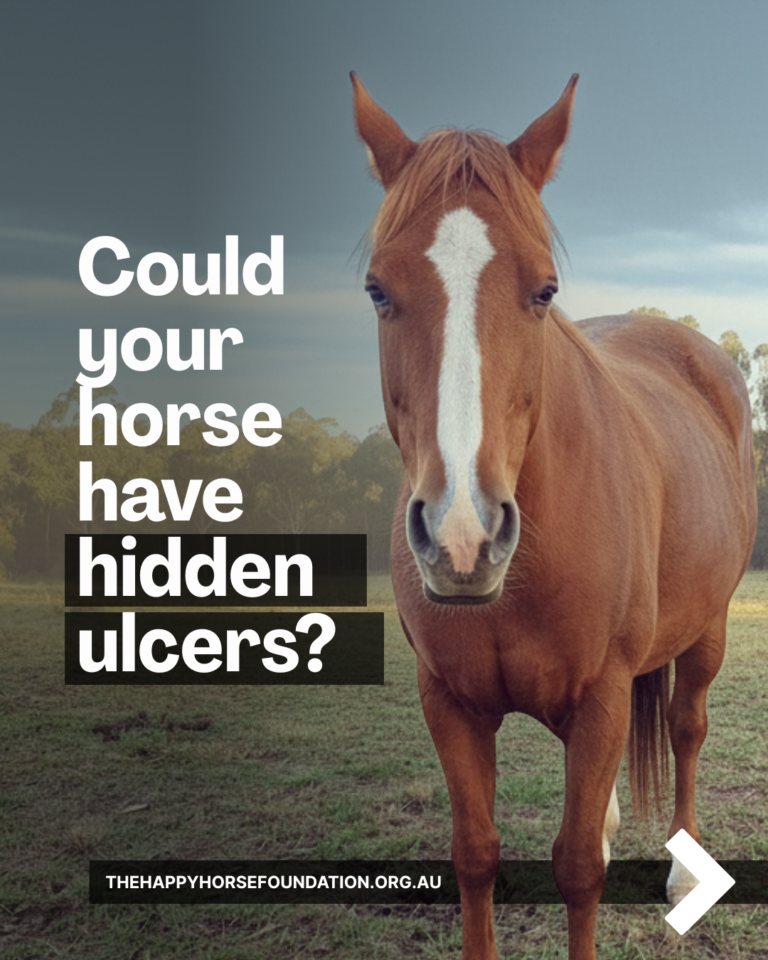
Gastric Ulcers in Horses
Gastric Ulcers in Horses How management, behaviour and biology interact to create ulcer risk How the horse’s digestive system functions A horse’s gastrointestinal tract is…
Read More