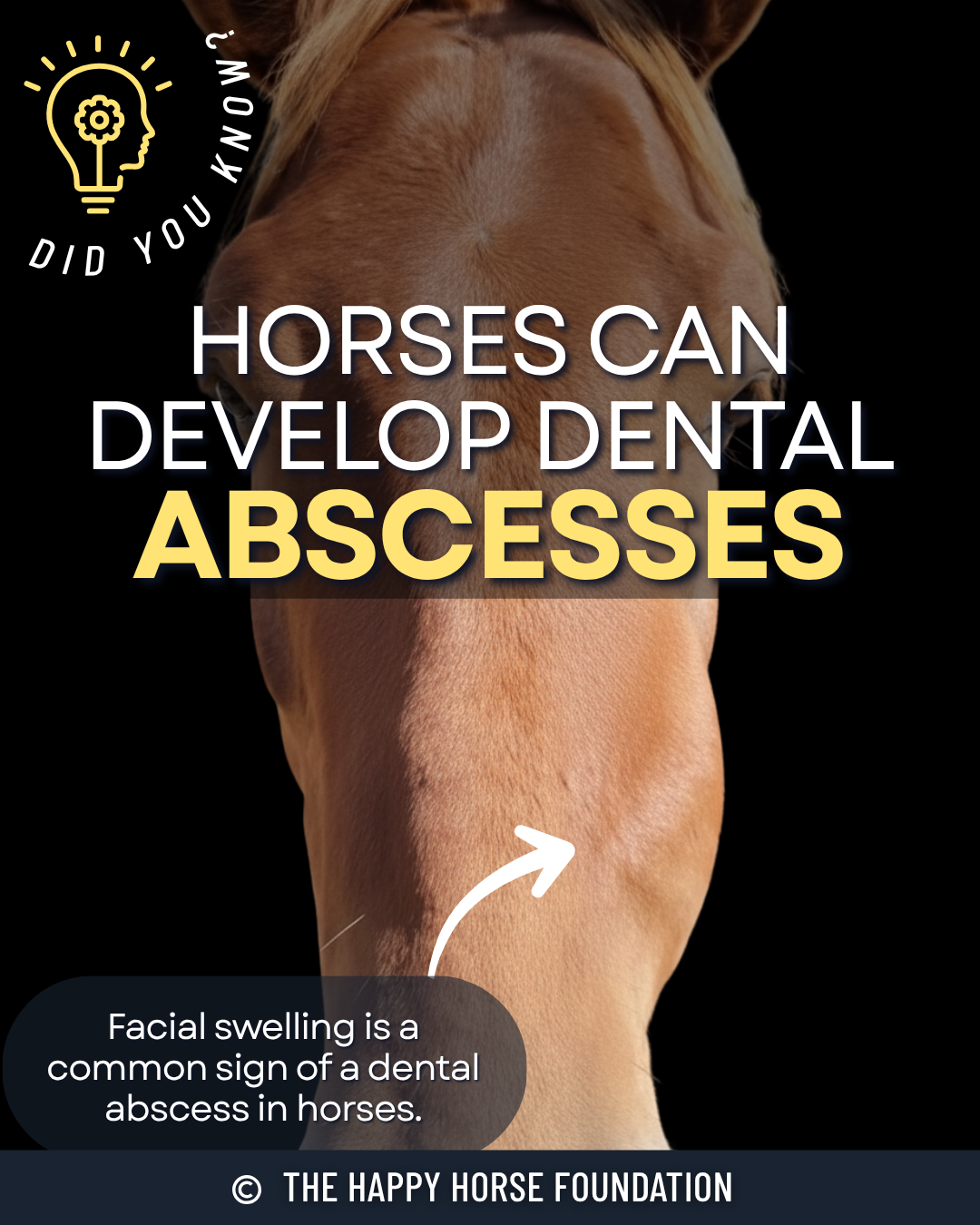
Did you know? Horses can develop dental abscesses!
A dental abscess occurs when bacteria invade the pulp or root of a tooth, leading to painful infection. These are most common in the cheek teeth and can have serious consequences if left untreated.
Signs to watch for include:
- Quidding (dropping feed) or slow chewing.
- Foul breath or discharge from the mouth.
- Swelling of the jaw or face.
- Resistance to handling, bitting, or sudden behaviour changes.
Causes include:
- Fractured or worn teeth.
- Advanced periodontal disease.
- Food packing between teeth (diastema).
- Occasionally, direct trauma.
If the affected tooth is in the upper jaw, infection may also spread into the nearby sinuses – causing a persistent, foul-smelling nasal discharge.
Treatment by an equine dentist or veterinarian may involve:
- Extraction of the affected tooth.
- Flushing or draining the infection.
- Antibiotics and supportive care.
Dental abscesses are painful but treatable. Even better than treatment is prevention: by regularly observing your horse closely and scheduling routine dental care, problems can often be avoided or caught early – before they become serious.
The Happy Horse Foundation is a registered charity with the Australian Charities and Not-for-profit Commission

The Happy Horse Foundation is a registered charity with the Australian Charities and Not-for-profit Commission

The Myth of the ‘Good Doer’ or ‘Easy Keeper’
The Myth of the ‘Good Doer’ or ‘Easy Keeper’ The Myth of the ‘Good Doer’ or ‘Easy Keeper’ Why everyday labels often hide discomfort in…
Read More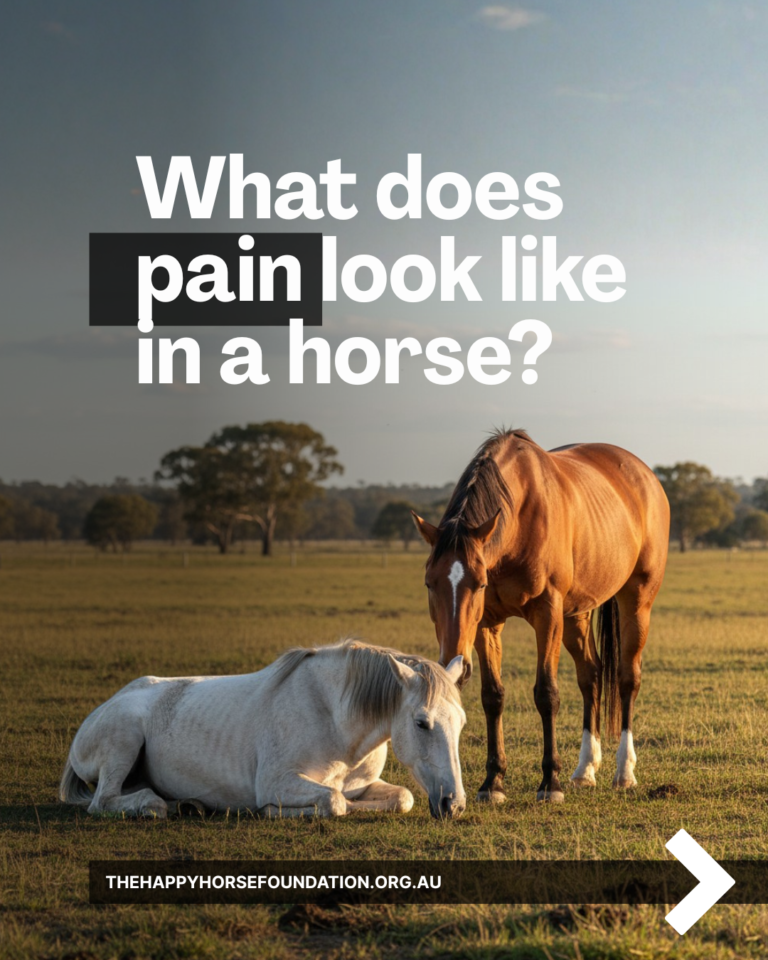
Pain ≠ Behaviour
Pain ≠ Behaviour Why everyday labels often hide discomfort in horses Pain in horses rarely looks the way we expect it to. It doesn’t always…
Read More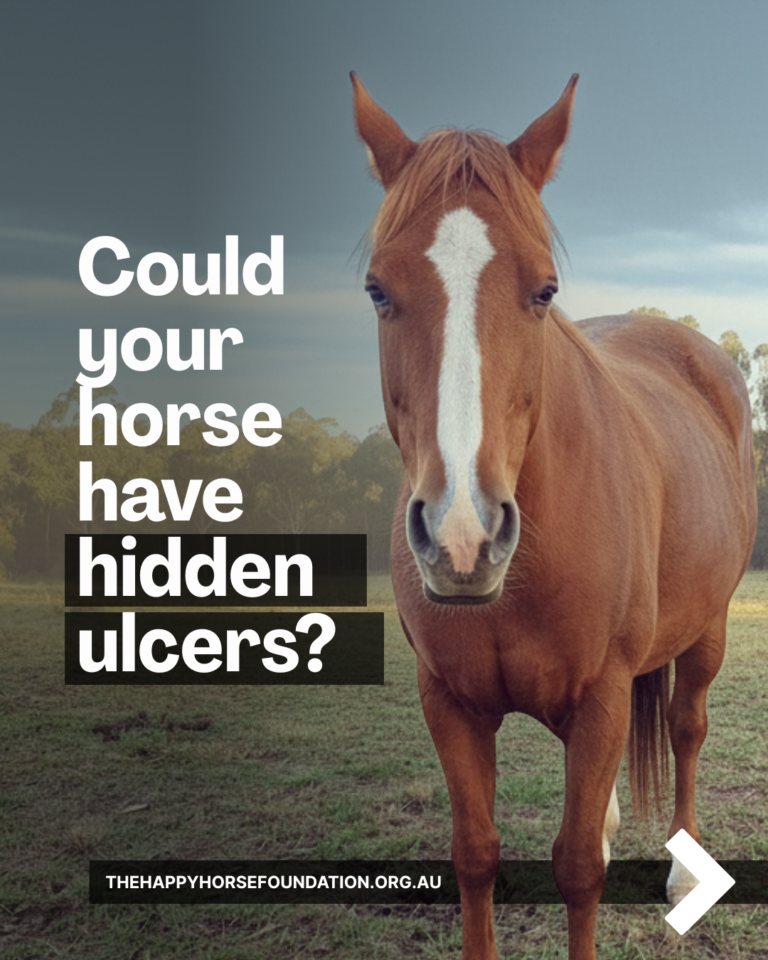
Gastric Ulcers in Horses
Gastric Ulcers in Horses How management, behaviour and biology interact to create ulcer risk How the horse’s digestive system functions A horse’s gastrointestinal tract is…
Read More