The Myth of the ‘Good Doer’ or ‘Easy Keeper’





The Myth of the ‘Good Doer’ or ‘Easy Keeper’
Why everyday labels often hide discomfort in horses
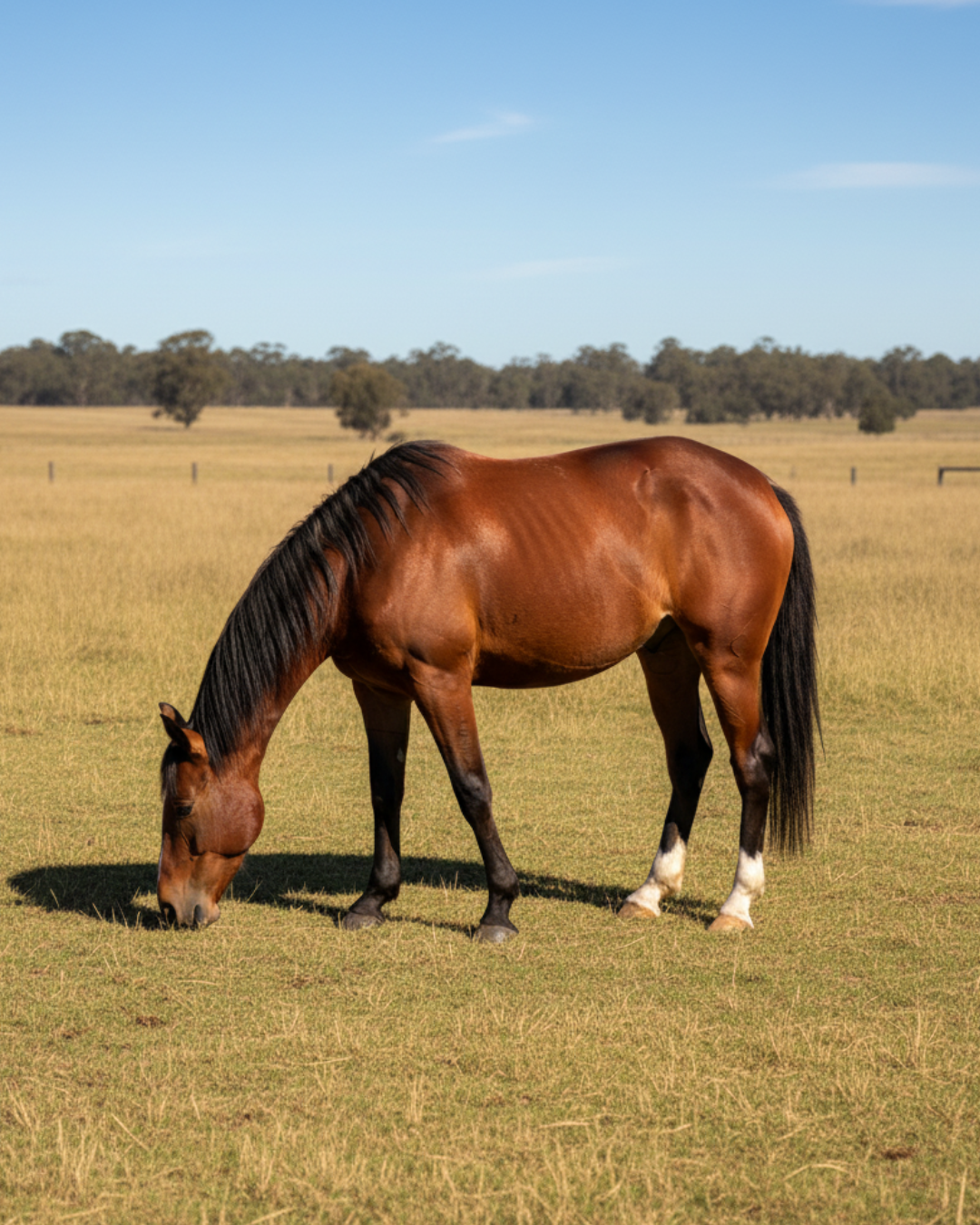
In many stables, the terms “good doer” or “easy keeper” are used with relief. They describe a horse that maintains weight easily, appears to need little feed, and seems straightforward to manage.
But these labels can be misleading. What is often praised as efficiency may actually reflect a horse living close to – or beyond – their metabolic comfort zone. Without careful management, so-called easy keepers are at higher risk of long-term health and welfare problems.
Understanding what these terms really mean – and what they don’t – is essential for keeping horses genuinely healthy, not just outwardly well-covered.
What Do We Mean by “Good Doer” or “Easy Keeper”?
These labels are commonly used for horses that:
- Gain or maintain weight easily, even on small amounts of feed
- Require little or no hard feed
- Appear to cope on pasture alone
They are often contrasted with “poor doers”, who struggle to maintain condition.
The issue is not the observation itself, but how quickly it becomes a fixed identity. Once a horse is labelled an easy keeper, management decisions are often simplified – sometimes at the expense of the horse’s underlying physiology.
Why the Label Can Be Misleading
Horses evolved to survive in environments where food availability fluctuated. Many breeds, particularly ponies and native types, developed highly efficient metabolisms that allowed them to store energy during times of abundance and survive periods of scarcity.
Modern management looks very different.
In today’s environment of:
- Improved pasture – modern grasses are selectively bred for productivity, often containing higher levels of sugars and digestible energy than the sparse, fibrous plants horses evolved to graze
- Reduced movement – smaller paddocks, stable time, and limited turnout mean many horses walk only a fraction of the distance they would naturally cover
- Constant forage availability – uninterrupted access to grass or hay removes natural fasting periods that once helped regulate metabolism
this natural efficiency can become a liability.
A horse that gains weight easily may not be thriving. Instead, they may be:
- Experiencing ongoing metabolic stress
- Developing insulin dysregulation (difficulty regulating blood sugar effectively)
- Carrying excess fat that strains joints, hooves, and internal organs
When this is framed as being a “good doer”, early warning signs can be overlooked.
Common Management Practices That Aren’t Ideal
Many well-intentioned strategies are frequently applied to easy keepers, but can unintentionally compromise welfare.
Severe Feed Restriction
To control weight, forage is often heavily restricted.
However, horses are designed to eat small amounts frequently. Long gaps without fibre can:
- Disrupt gut function
- Increase the risk of gastric ulcers
- Lead to frustration, stress, and abnormal behaviours
Weight management should never come at the cost of digestive or mental health.
Assuming “Grass Only” Is Safe
Grass is often viewed as a natural and harmless feed.
In reality, pasture – particularly improved or well-managed pasture – can be:
- High in sugars and starches
- A major contributor to obesity and laminitis
- Highly variable depending on season, weather, and time of day
For metabolically sensitive horses, grass intake often matters more than hard feed.
Normalising Subtle Warning Signs
Easy keepers are frequently described as “just a bit chunky” or “solid”, while early indicators of metabolic strain are missed, such as:
- A firm or enlarged crest along the neck
- Fat pads behind the shoulders or around the tail head
- Reduced willingness to move freely
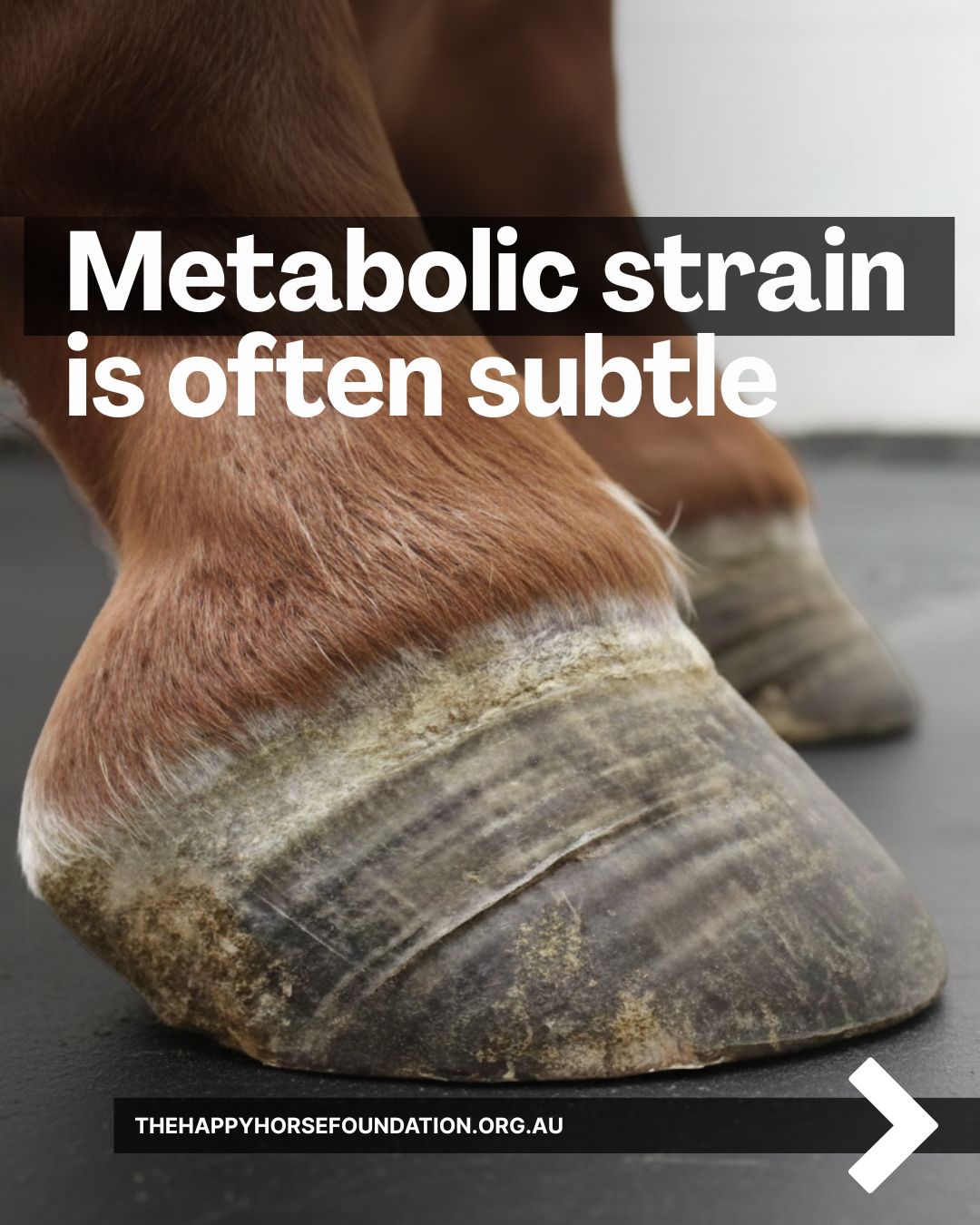
- Intermittent foot soreness or shortened stride
These are not cosmetic traits. They are physical signs that the body is under strain.
Why This Matters for Welfare
Excess body fat and metabolic dysregulation are strongly linked to:
- Laminitis
- Degenerative joint disease
- Reduced comfort and mobility
- Shortened working and active lifespan
A horse can look well-fed and still be uncomfortable. Welfare is not defined by roundness – it is defined by how well the body is functioning.
Rethinking the “Easy Keeper”
Instead of asking “How little can this horse have?”, a more useful question is:
“What does this horse need to remain metabolically healthy?”
This shift moves management away from restriction and toward balance, predictability, and individualised care.
Practical, Welfare-Focused Steps You Can Take
1. Assess Body Condition Objectively
Use a recognised body condition scoring system and assess with your hands, not just your eyes. Fat distribution is often more important than overall weight.
2. Manage Forage Quality, Not Just Quantity
- Source lower-sugar hay where possible
- Consider soaking hay to reduce soluble sugars when appropriate
- Avoid long fasting periods
Consistency and fibre intake are key to gut and metabolic health.
3. Be Intentional With Pasture Access
Tools such as:
- Track systems
- Strip grazing
- Time-limited turnout
allow horses to move and socialise while reducing excessive intake.
4. Prioritise Regular Movement
Appropriate, consistent exercise improves:
- Insulin sensitivity
- Joint and hoof health
- Overall comfort and mental wellbeing
Movement is one of the most effective management tools available.
- Age
- Season
- Workload
- Health status
Ongoing observation matters more than any single category.
Moving Beyond the Myth
The idea of the “easy keeper” can feel reassuring. But labels can obscure what is actually happening inside the horse’s body.
When we look beyond the shorthand and respond to the individual in front of us, we prevent avoidable disease, reduce suffering, and support long-term welfare.
A horse that holds weight easily isn’t just convenient.
It’s information – and it’s our responsibility to respond appropriately.
References
- Bamford, N. J., Potter, S. J., Harris, P. A., & Bailey, S. R. (2014). Effect of dietary non-structural carbohydrates on insulin and glucose dynamics in horses. Equine Veterinary Journal, 46(1), 39–45.
- Carter, R. A., McCutcheon, L. J., George, L. A., Smith, T. L., Frank, N., & Geor, R. J. (2009). Effects of diet-induced weight gain on insulin sensitivity and plasma hormone concentrations in horses. American Journal of Veterinary Research, 70(10), 1250–1258.
- Dugdale, A. H. A., Curtis, G. C., Harris, P. A., & Argo, C. M. G. (2010). Assessment of body condition and fat distribution in horses. Veterinary Journal, 185(3), 316–321.
- Frank, N., Geor, R. J., Bailey, S. R., Durham, A. E., & Johnson, P. J. (2010). Equine metabolic syndrome. Journal of Veterinary Internal Medicine, 24(3), 467–475.
- Harris, P. A., Ellis, A. D., Fradinho, M. J., Jansson, A., Julliand, V., Luthersson, N., … Vervuert, I. (2017). Review: Feeding conserved forage to horses. Animal, 11(6), 958–967.
- Longland, A. C., & Byrd, B. M. (2006). Pasture non-structural carbohydrates and equine laminitis. Journal of Nutrition, 136(7 Suppl), 2099S–2102S.
- Longland, A. C., & Cairns, A. J. (2002). Seasonal and diurnal changes in grass non-structural carbohydrates and implications for equine grazing management. Equine Veterinary Journal, 34(5), 444–451.
- McGowan, C. M., Frost, R., Pfeiffer, D. U., Neiger, R., & Eppink, L. (2004). Serum insulin concentrations in horses with laminitis. Journal of Veterinary Internal Medicine, 18(5), 711–715.
- Pollitt, C. C. (2004). Equine laminitis: A revised pathophysiology. Proceedings of the Australian Equine Veterinary Association, Bain-Fallon Memorial Lectures.
- Pratt-Phillips, S. E., & Lawrence, L. M. (2014). Nutrition and metabolic responses of horses. In Equine Applied and Clinical Nutrition (Saunders Elsevier).
- van Eps, A. W., & Pollitt, C. C. (2006). Equine laminitis induced by oligofructose. Equine Veterinary Journal, 38(3), 203–208.
The Happy Horse Foundation is a registered charity with the Australian Charities and Not-for-profit Commission

The Happy Horse Foundation is a registered charity with the Australian Charities and Not-for-profit Commission

The Myth of the ‘Good Doer’ or ‘Easy Keeper’
The Myth of the ‘Good Doer’ or ‘Easy Keeper’ The Myth of the ‘Good Doer’ or ‘Easy Keeper’ Why everyday labels often hide discomfort in…
Read More
Pain ≠ Behaviour
Pain ≠ Behaviour Why everyday labels often hide discomfort in horses Pain in horses rarely looks the way we expect it to. It doesn’t always…
Read More
Gastric Ulcers in Horses
Gastric Ulcers in Horses How management, behaviour and biology interact to create ulcer risk How the horse’s digestive system functions A horse’s gastrointestinal tract is…
Read More