Pain ≠ Behaviour
Why everyday labels often hide discomfort in horses
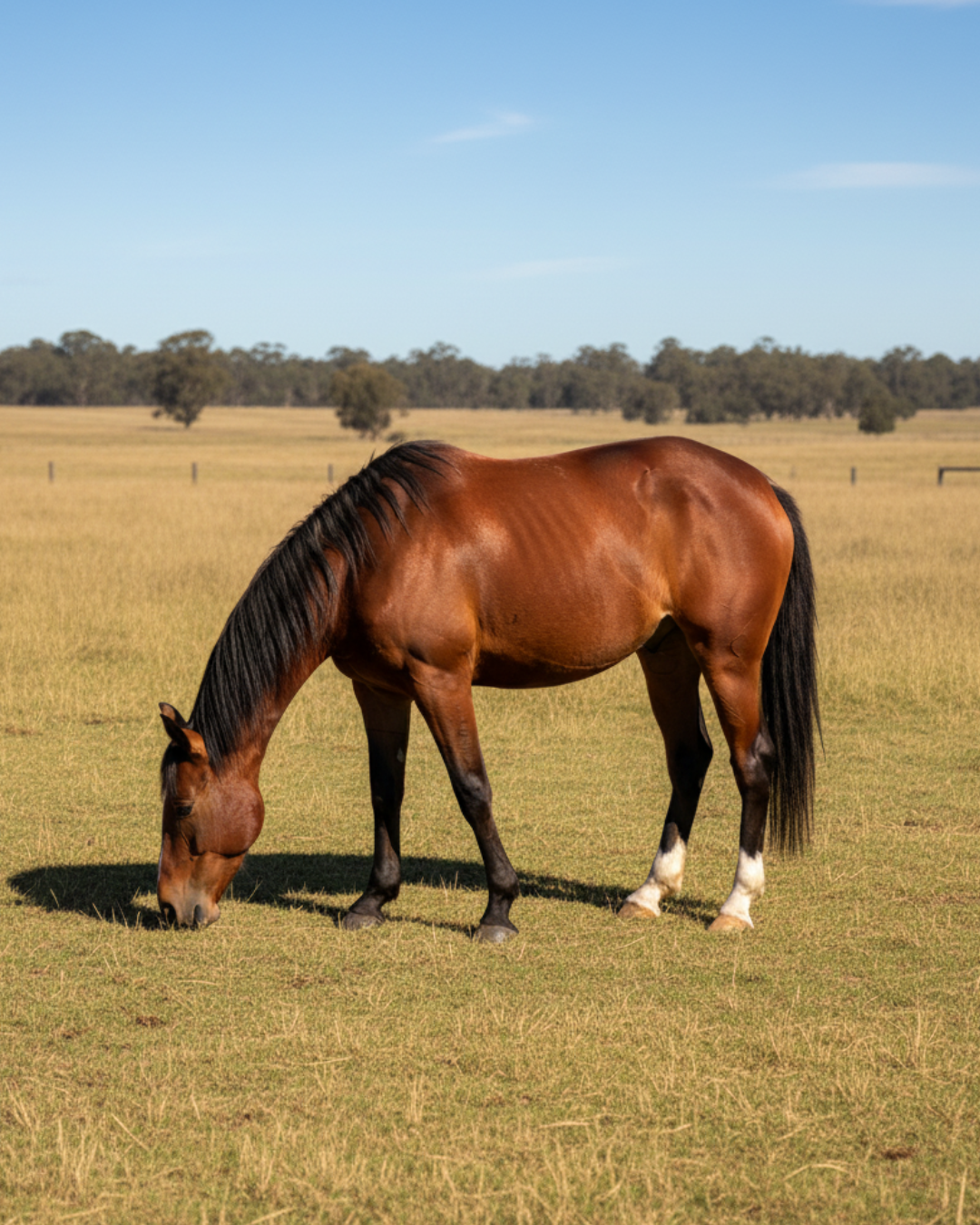
Pain in horses rarely looks the way we expect it to.
It doesn’t always present as obvious lameness, distress, or dramatic behaviour. More often, it appears quietly – as small changes that are easy to overlook, explain away, or misinterpret.
A horse who is labelled as lazy.
A horse who has become difficult.
A horse who is suddenly naughty, girthy, or cold-backed.
In many cases, these labels are not descriptions of temperament or attitude. They are descriptions of a horse adapting to discomfort.
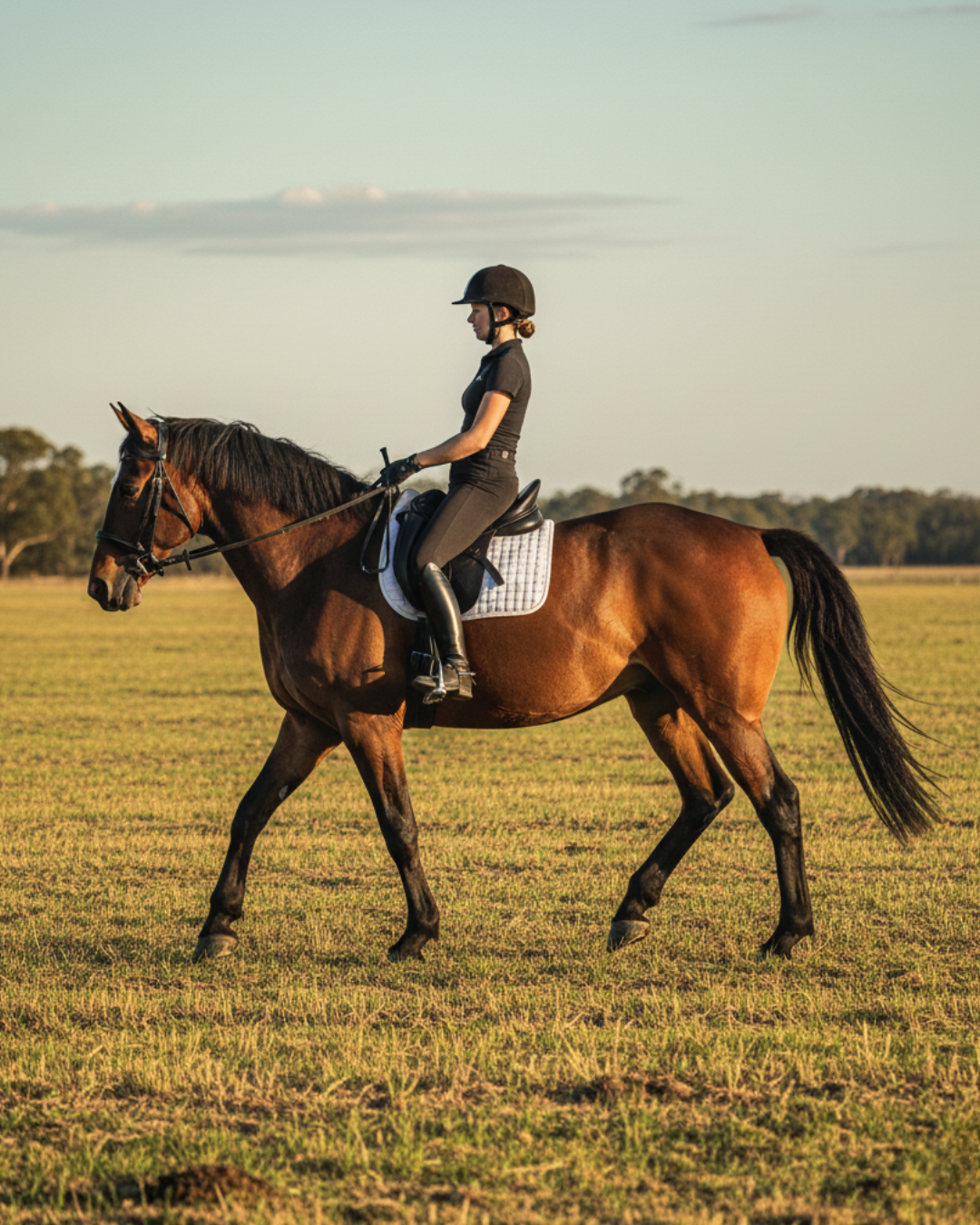
Horses are experts at hiding pain
Horses commonly mask discomfort, and many signs of pain are subtle, variable, and easy to miss without specific knowledge of what to look for.
Rather than overt distress, pain often appears as gradual changes in posture, expression, movement, or willingness.
This means that many horses do not display pain through obvious signs such as limping or dramatic behavioural responses. Instead, they alter how they move, how they respond, and how much they are willing to do.
Because these changes often develop slowly, they can easily become accepted as “just how the horse is”.
Adaptation is not the same as comfort
One of the most important concepts in horse welfare is the difference between
coping and being comfortable.
When discomfort develops gradually, horses adapt. They adjust posture, reduce range of movement, limit effort, or change how they respond to pressure. From the outside, this can look like compliance, dullness, or mild resistance – rather than pain.
A horse that has adapted well to discomfort may still:
- Go to work
- Follow routines
- Appear calm or manageable
But adaptation does not mean the horse is pain-free. It simply means the horse has learned how to function around discomfort.
Dental pain in horses is common, often subtle and frequently misunderstood. Horses rarely show obvious signs of discomfort because they have evolved to mask vulnerability. Most dental disorders develop slowly, giving horses time to adapt. These adaptations often appear long before physical symptoms and provide the earliest clues that something is changing inside the mouth.
When behaviour is mislabelled
Because pain is often subtle, it is frequently interpreted through a behavioural lens rather than a physical one.
Common labels such as lazy, naughty, cold-backed, or girthy are often applied when a horse shows reluctance, tension, or resistance. While behaviour is always real, it is not always the root cause.
Behaviour is communication. It is the horse’s way of responding to their internal and external environment. When discomfort is present, behaviour often changes – not as defiance or attitude, but as self-protection.
Correcting or suppressing behaviour without first considering pain risks silencing the signal rather than addressing the cause.
“When we understand that many horses cope quietly rather than protest loudly, we become better equipped to notice change”
Why pain so often goes unnoticed
Pain in horses is commonly missed not because owners or professionals don’t care, but because it is easy to miss.
Several factors contribute:
- Many painful conditions develop slowly over time
- Horses normalise their own discomfort
- Humans normalise gradual change
- Subtle signs require specific education to recognise
Without a clear understanding of what
normal comfort, posture, and movement look like, early indicators of pain can pass unnoticed for months or even years.
A simple and powerful reframe
Instead of asking,
“Why is this horse behaving like this?”
A more helpful question is often:
“What might this behaviour be telling me?”
Approaching behaviour as information rather than defiance creates space for curiosity, investigation, and better outcomes for the horse.
Moving forward
Recognising that pain does not always look like pain is the first step toward better welfare. When we understand that many horses cope quietly rather than protest loudly, we become better equipped to notice change, question labels, and advocate for comfort rather than compliance.
In the next part of this series, we’ll explore the everyday labels commonly applied to horses – and what they may actually be telling us about discomfort beneath the surface.
References
- Ashley, F. H., Waterman-Pearson, A. E., & Whay, H. R. (2005). Behavioural assessment of pain in horses and donkeys: Application to clinical practice and future studies. Equine Veterinary Journal, 37(6), 565–575.
- Dyson, S., Berger, J., Ellis, A. D., & Mullard, J. (2018). Development of an ethogram for a pain scoring system in ridden horses and its application to determine the presence of musculoskeletal pain. Journal of Veterinary Behaviour, 23, 47–57.
- Dyson, S., & Pollard, D. (2020). Application of a ridden-horse ethogram to video recordings of horses before and after diagnostic analgesia. Equine Veterinary Education, 32(3), 143–152.
- Gleerup, K. B., Forkman, B., Lindegaard, C., & Andersen, P. H. (2015). An equine pain face. Veterinary Anaesthesia and Analgesia, 42(1), 103–114.
- McGreevy, P., Berger, J., de Brauwere, N., et al. (2018). Using the Five Domains Model to assess the adverse impacts of husbandry, veterinary, and training interventions on horse welfare. Animals, 8(3), 41.
- Mellor, D. J., Beausoleil, N. J., Littlewood, K. E., et al. (2020). The Five Domains Model: Including human–animal interactions in assessments of animal welfare. Animals, 10(10), 1870.
- Price, J., Marques, J. M., Welsh, E. M., & Waran, N. K. (2003). Attitudes towards pain in horses. Veterinary Record, 152(18), 570–575.
The Happy Horse Foundation is a registered charity with the Australian Charities and Not-for-profit Commission

The Happy Horse Foundation is a registered charity with the Australian Charities and Not-for-profit Commission

The Myth of the ‘Good Doer’ or ‘Easy Keeper’
The Myth of the ‘Good Doer’ or ‘Easy Keeper’ The Myth of the ‘Good Doer’ or ‘Easy Keeper’ Why everyday labels often hide discomfort in…
Read More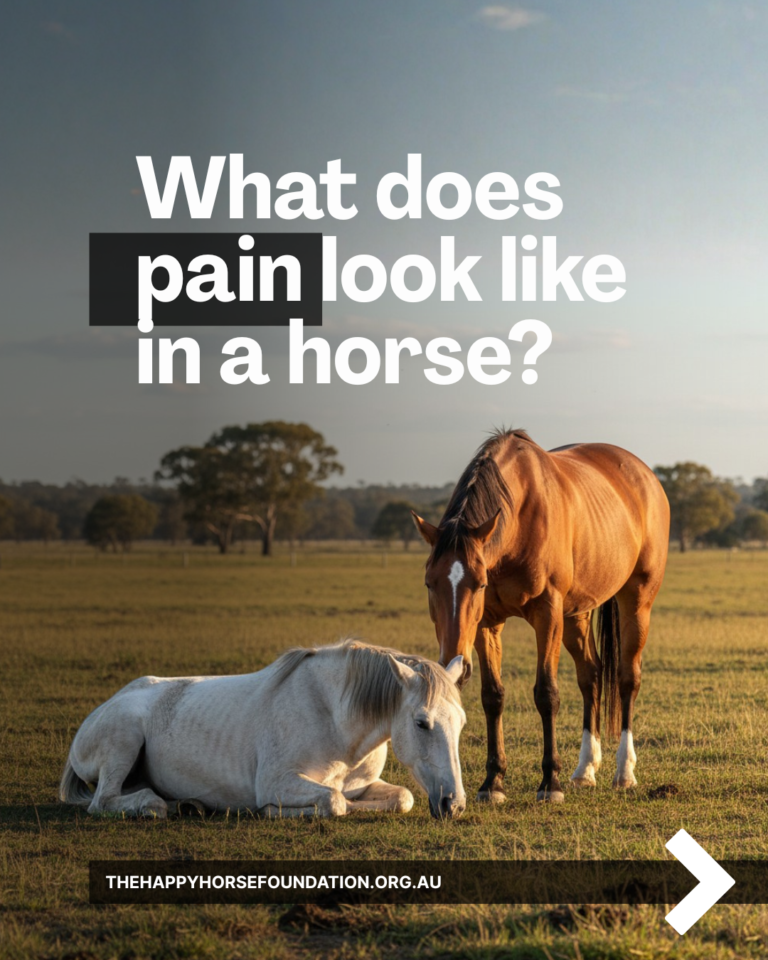
Pain ≠ Behaviour
Pain ≠ Behaviour Why everyday labels often hide discomfort in horses Pain in horses rarely looks the way we expect it to. It doesn’t always…
Read More
Gastric Ulcers in Horses
Gastric Ulcers in Horses How management, behaviour and biology interact to create ulcer risk How the horse’s digestive system functions A horse’s gastrointestinal tract is…
Read More