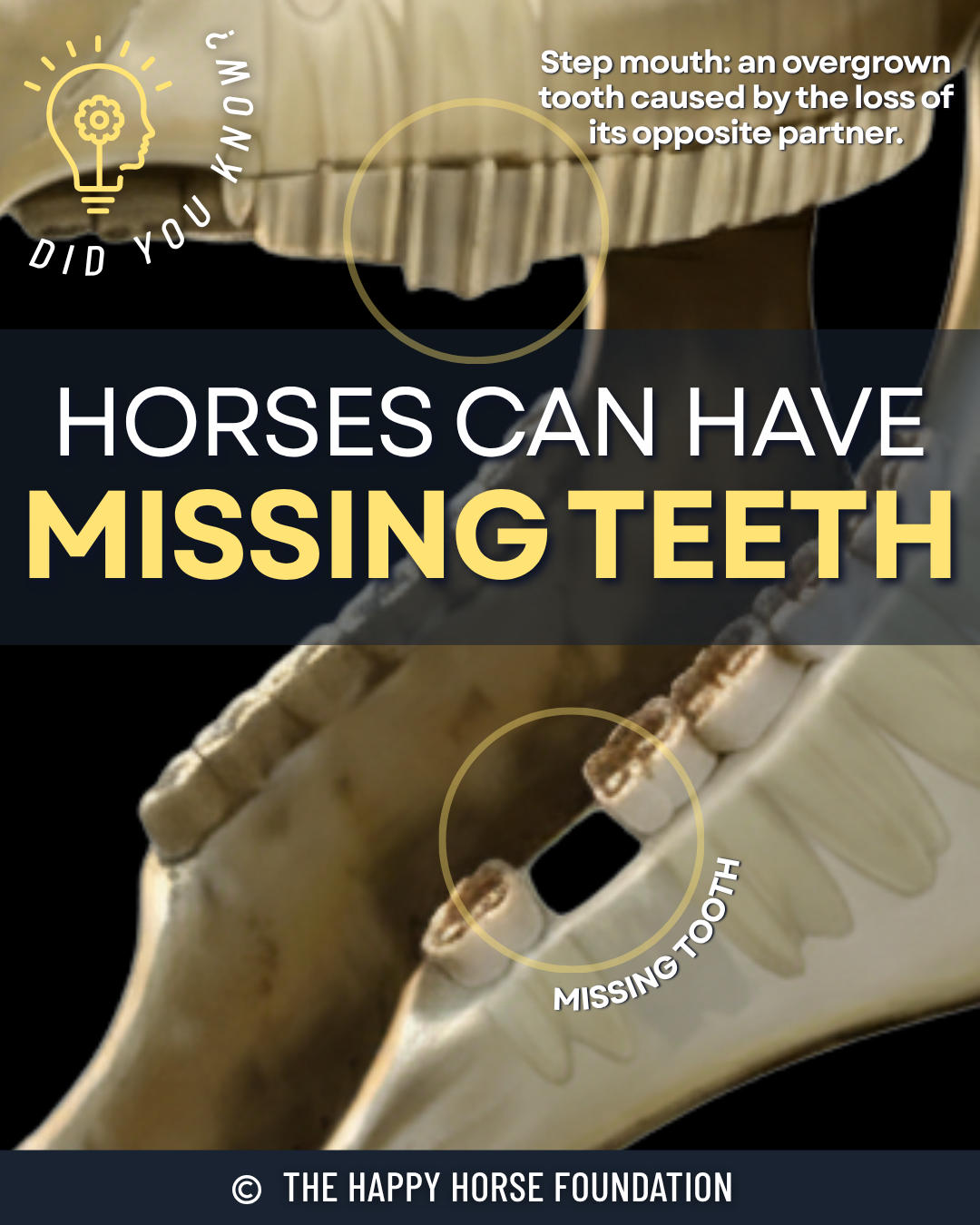
Did you know? Horses can have missing teeth?
Missing teeth may be present from birth (congenital absence) or occur later in life due to extraction, severe wear, or age-related tooth loss.
While a single missing tooth may not cause immediate problems, over time it disrupts the balance of chewing surfaces. With no opposing tooth to wear against, the opposite partner tooth continues to erupt and may become overgrown.
Consequences can include:
- Uneven grinding surfaces or step mouth.
- Difficulty chewing or quidding (dropping feed).
- Jaw restriction and discomfort.
- Weight loss in severe cases.
Management involves:
- Providing a fibre-rich diet to promote natural wear.
- Offering easily chewed forms (short-chop forage, soaked hay, or pelleted feeds) when multiple teeth are missing.
- Observing closely for early signs of chewing difficulty.
- Scheduling routine dental exams to monitor changes.
- Careful floating to reduce overgrowth of opposing teeth.
Missing teeth cannot be replaced, but with attentive care and regular dentistry, horses can remain comfortable and maintain good condition well into old age.
The Happy Horse Foundation is a registered charity with the Australian Charities and Not-for-profit Commission

The Happy Horse Foundation is a registered charity with the Australian Charities and Not-for-profit Commission

The Myth of the ‘Good Doer’ or ‘Easy Keeper’
The Myth of the ‘Good Doer’ or ‘Easy Keeper’ The Myth of the ‘Good Doer’ or ‘Easy Keeper’ Why everyday labels often hide discomfort in…
Read More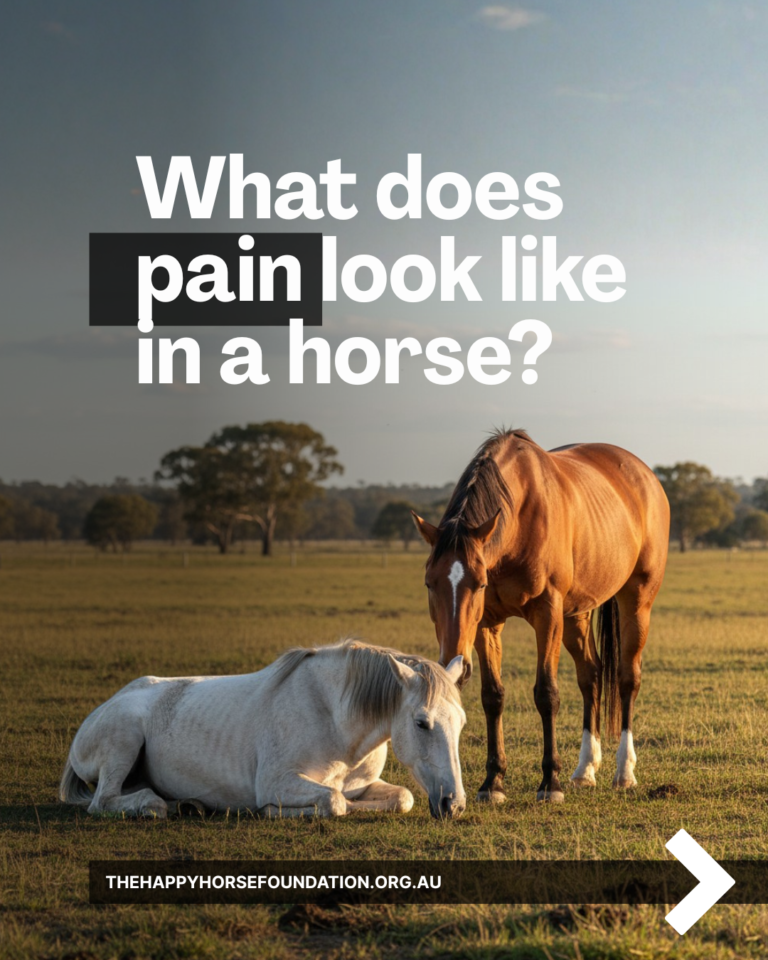
Pain ≠ Behaviour
Pain ≠ Behaviour Why everyday labels often hide discomfort in horses Pain in horses rarely looks the way we expect it to. It doesn’t always…
Read More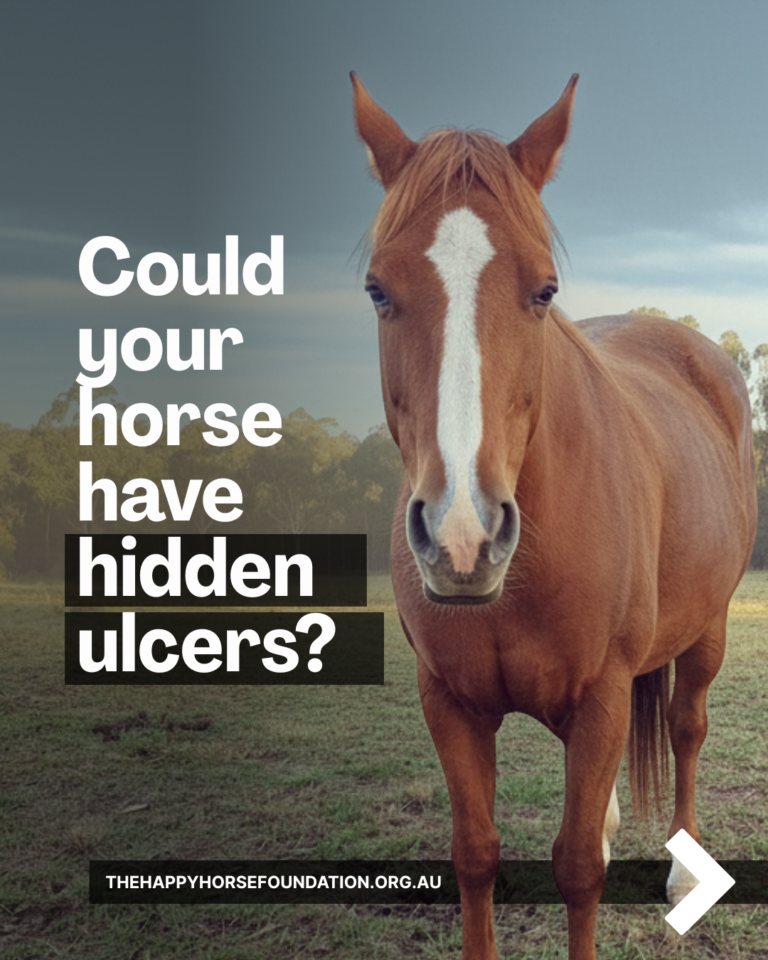
Gastric Ulcers in Horses
Gastric Ulcers in Horses How management, behaviour and biology interact to create ulcer risk How the horse’s digestive system functions A horse’s gastrointestinal tract is…
Read More