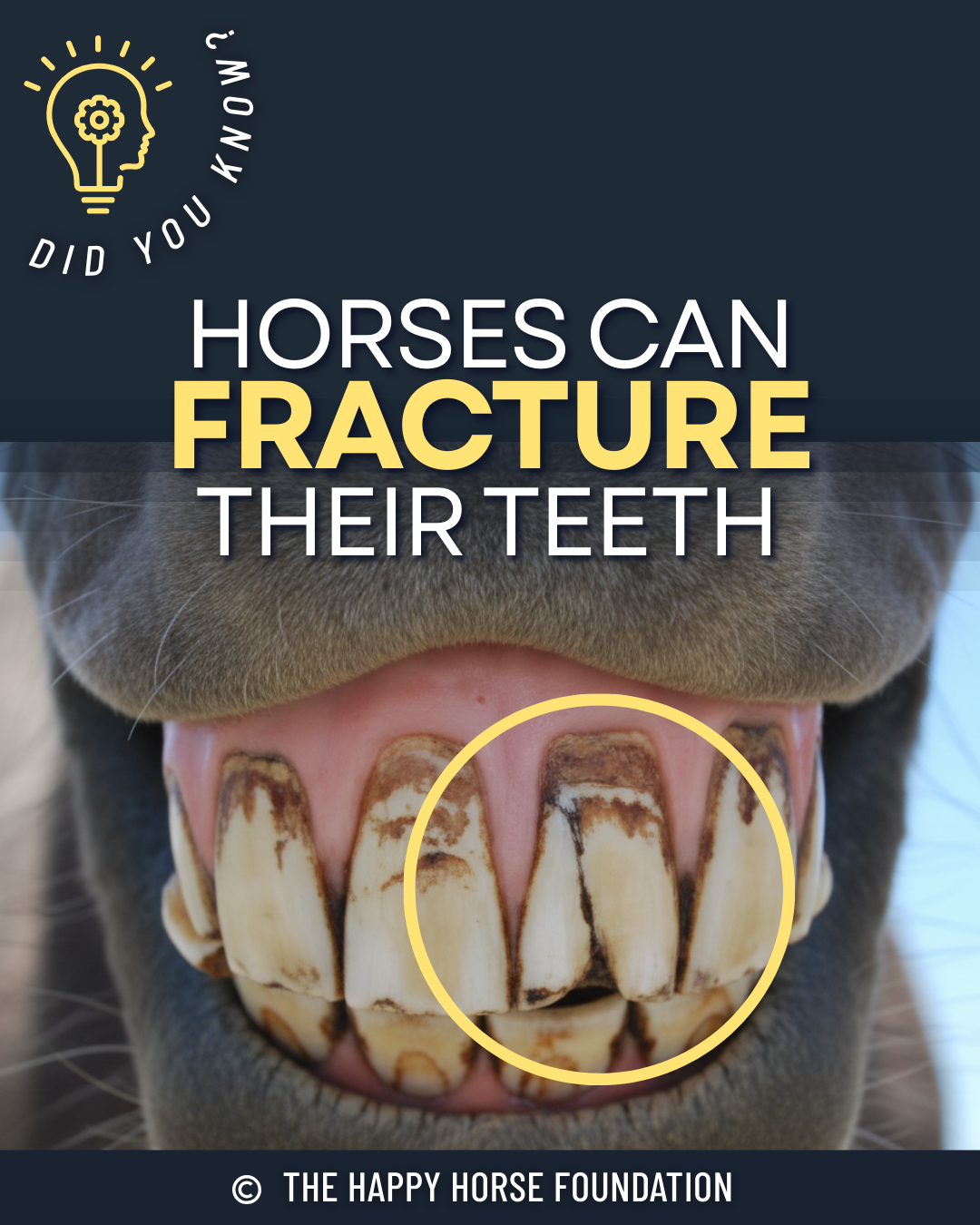
Did you know? Horses can fracture their teeth!
Fractured teeth are more common than many people realise. They can occur when a tooth is already weakened due to age or pre-existing malocclusions, or after sudden impact – like biting on a hard object, trauma to the face, or uneven chewing forces.
Fractures may be:
- Small cracks with little effect.
- Larger splits exposing sensitive pulp.
- Complete breaks, leaving sharp or loose fragments.
- A common type is a slab fracture, where a vertical piece of the tooth breaks off.
Signs of a fractured tooth include:
- Quidding (dropping partially chewed feed).
- Head tossing, resisting the bit, or sudden behaviour changes.
- Foul odour or discharge if infection develops.
- Swelling of the face in severe cases.
- It is important to remember that a horse may show no outward signs of a fracture until a severe infection has developed.
Not all fractures are painful, but those that expose the pulp or trap food can lead to infection and abscesses.
Treatment depends on the fracture type – some teeth can be smoothed and monitored, while others may need extraction to restore comfort. For severe cases requiring extraction, post-operative care, including pain management and a temporary change in diet to softer feeds, is essential for a horse’s recovery. Regular dental checks remain the best safeguard against hidden damage.
The Happy Horse Foundation is a registered charity with the Australian Charities and Not-for-profit Commission

The Happy Horse Foundation is a registered charity with the Australian Charities and Not-for-profit Commission

The Myth of the ‘Good Doer’ or ‘Easy Keeper’
The Myth of the ‘Good Doer’ or ‘Easy Keeper’ The Myth of the ‘Good Doer’ or ‘Easy Keeper’ Why everyday labels often hide discomfort in…
Read More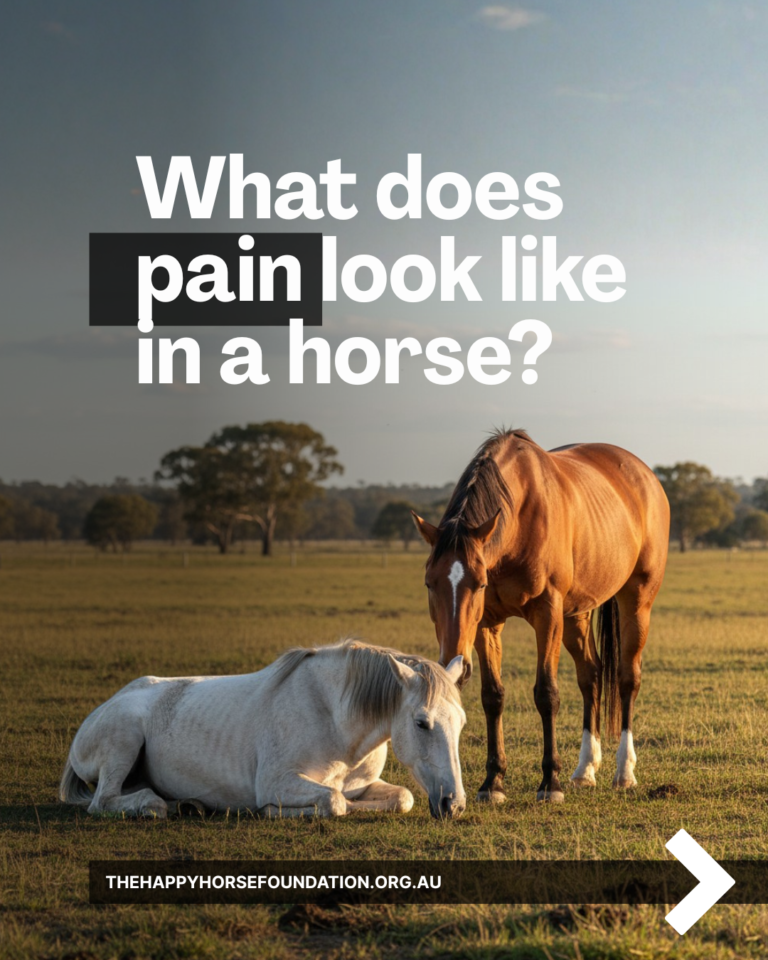
Pain ≠ Behaviour
Pain ≠ Behaviour Why everyday labels often hide discomfort in horses Pain in horses rarely looks the way we expect it to. It doesn’t always…
Read More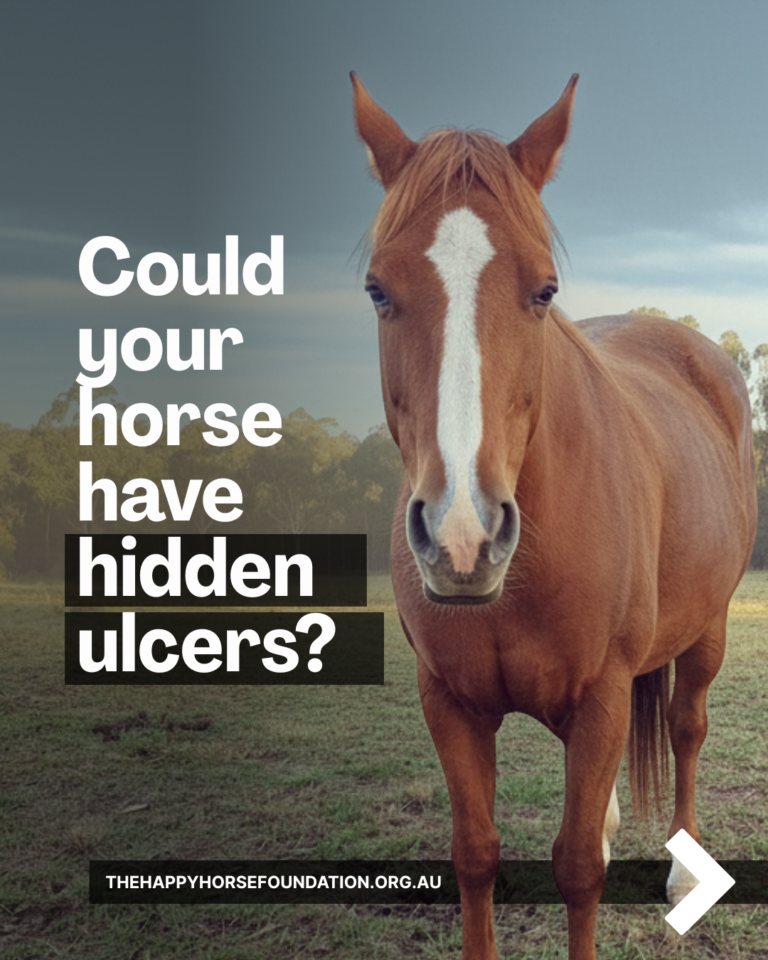
Gastric Ulcers in Horses
Gastric Ulcers in Horses How management, behaviour and biology interact to create ulcer risk How the horse’s digestive system functions A horse’s gastrointestinal tract is…
Read More