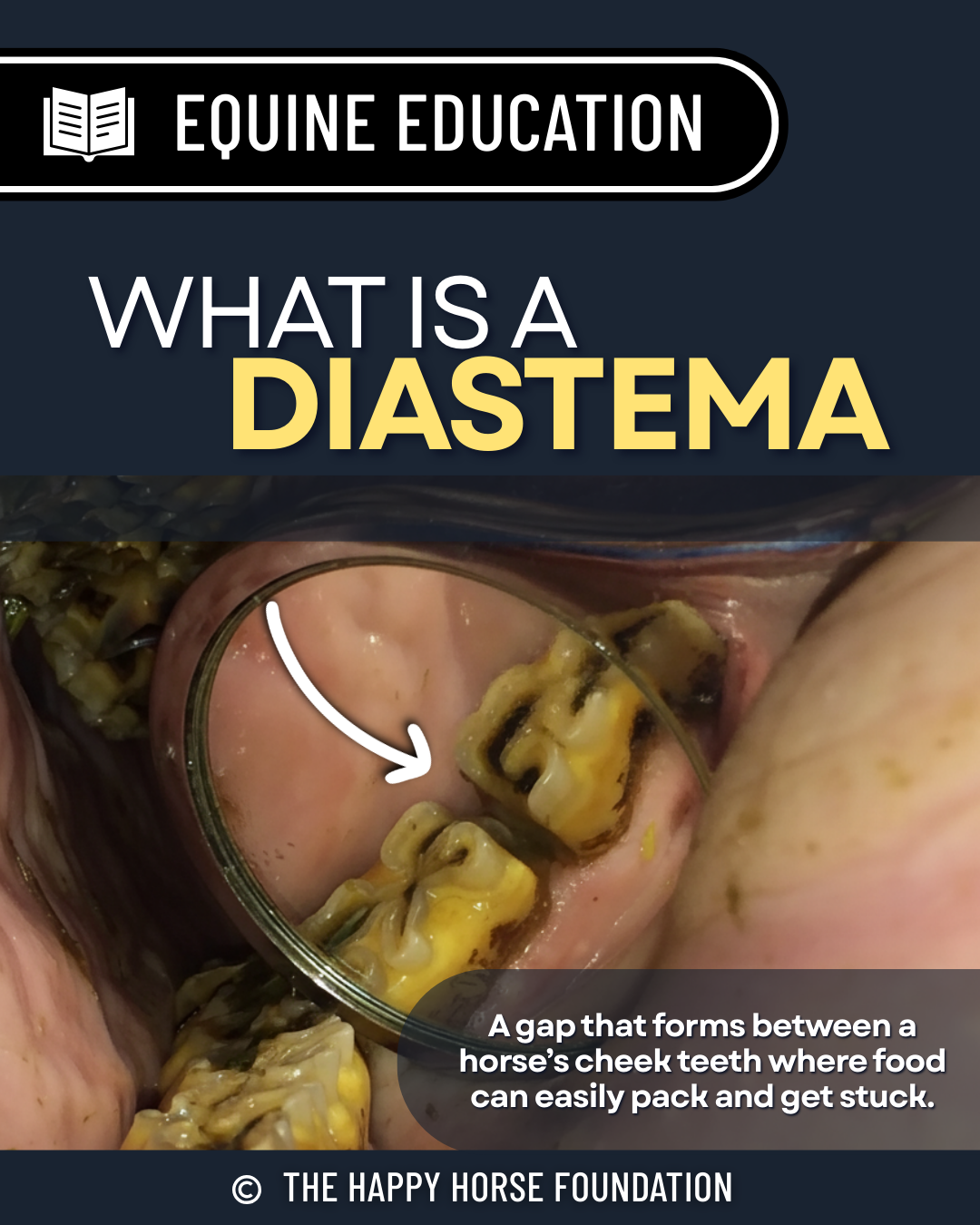
Did you know? Horses can develop diastema (the singular term for a gap)!
Diastemata (the plural term for these gaps) are abnormal gaps within the grinding teeth themselves and often categorised as open (gap runs all the way through) or closed.
Closed diastema – where the gap is narrow at the top and traps food under high pressure – is significantly more common and painful.
Why they matter:
- Food trapped in the gaps rots and irritates the gums: This can lead to painful periodontal disease.
- Horses may show signs like foul breath, quidding (dropping feed), or slow chewing.
Causes include:
- Natural variation in tooth spacing.
- Worn or missing teeth.
- Age-related changes in the dental arcades.
Treatment may involve debridement (thoroughly cleaning out the trapped food and debris), careful widening, or flushing of the gaps by an equine dentist to stop food from packing, along with regular check-ups.
Furthermore, feeding long-stem forage (hay or grass) is beneficial as the long fibres help keep the gaps cleaner during the natural chewing process.
Diastemata can be uncomfortable and lead to serious gum disease if left untreated – but with early detection and proper management, horses can remain comfortable and keep their teeth healthy for longer.
The key is vigilance: recognising changes early and keeping up with routine dental care ensures your horse can chew, graze, and thrive without pain.
The Happy Horse Foundation is a registered charity with the Australian Charities and Not-for-profit Commission

The Happy Horse Foundation is a registered charity with the Australian Charities and Not-for-profit Commission

The Myth of the ‘Good Doer’ or ‘Easy Keeper’
The Myth of the ‘Good Doer’ or ‘Easy Keeper’ The Myth of the ‘Good Doer’ or ‘Easy Keeper’ Why everyday labels often hide discomfort in…
Read More
Pain ≠ Behaviour
Pain ≠ Behaviour Why everyday labels often hide discomfort in horses Pain in horses rarely looks the way we expect it to. It doesn’t always…
Read More
Gastric Ulcers in Horses
Gastric Ulcers in Horses How management, behaviour and biology interact to create ulcer risk How the horse’s digestive system functions A horse’s gastrointestinal tract is…
Read More