What is parrot mouth in horses?
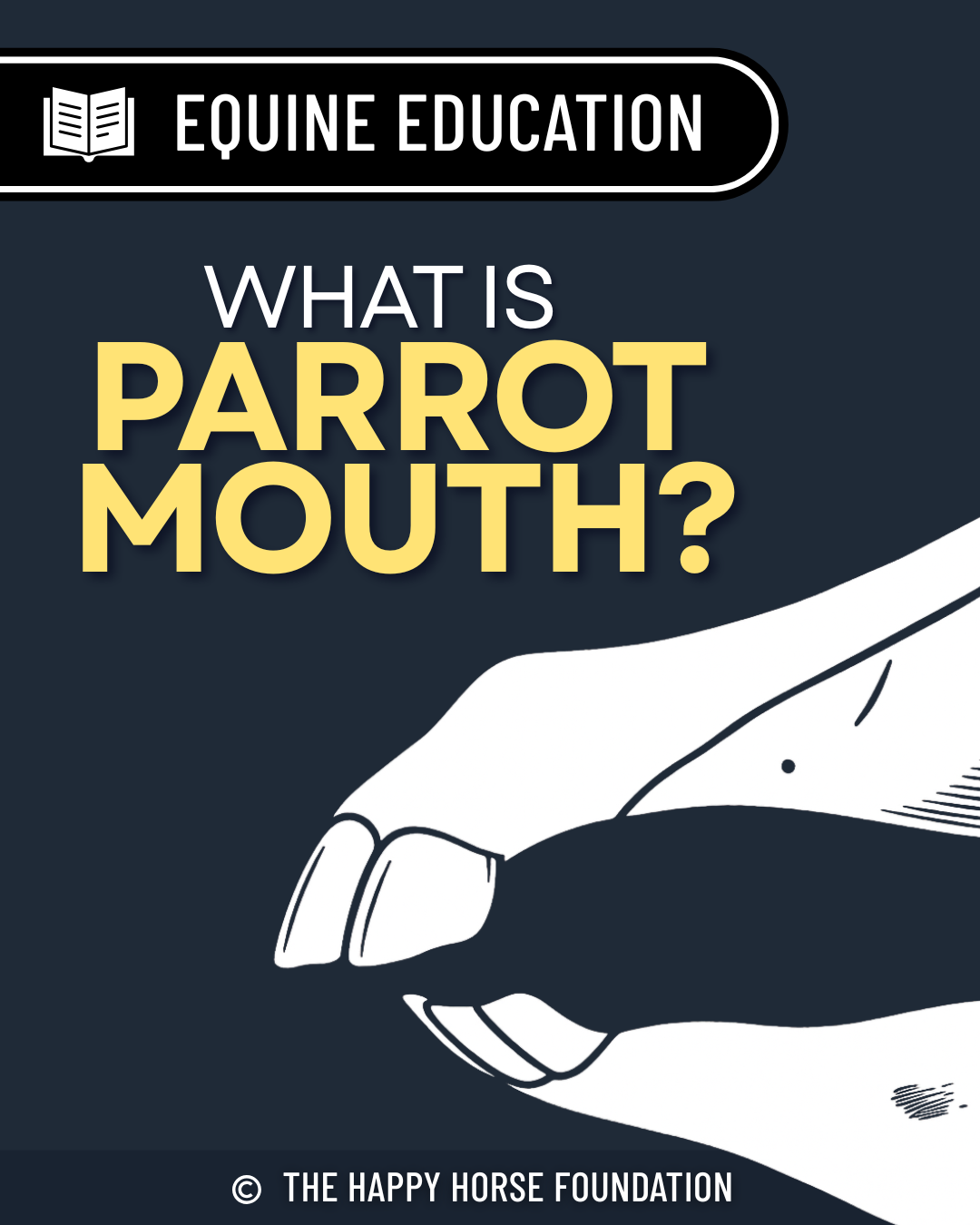
Parrot mouth, also known as brachygnathism, is a dental abnormality from birth where the upper incisors extend beyond the lowers, creating an overbite.
This condition can range from mild to severe, and it is believed to have a genetic component.
This misalignment means the incisors don’t meet evenly, and the cheek teeth may also wear abnormally.
The biggest concern is grazing difficulty – depending on severity, some horses struggle to bite off grass, and in extreme cases may not be able to graze at all. These horses must be supplied with hay around the clock to meet their fibre needs.
Over time, parrot mouth can also lead to:
- Hooks and sharp points, which can cause pain.
- Uneven grinding surfaces.
- Pain, difficulty chewing, and weight loss.
- In some severe cases, the discomfort can affect a horse’s willingness to be handled, their head carriage or acceptance of a bit.
While parrot mouth can’t be “cured,” it can be managed. Regular dental exams are essential to balance the teeth, while a fibre-rich diet supports natural wear and keeps chewing as comfortable as possible.
The Happy Horse Foundation is a registered charity with the Australian Charities and Not-for-profit Commission

The Happy Horse Foundation is a registered charity with the Australian Charities and Not-for-profit Commission

The Myth of the ‘Good Doer’ or ‘Easy Keeper’
The Myth of the ‘Good Doer’ or ‘Easy Keeper’ The Myth of the ‘Good Doer’ or ‘Easy Keeper’ Why everyday labels often hide discomfort in…
Read More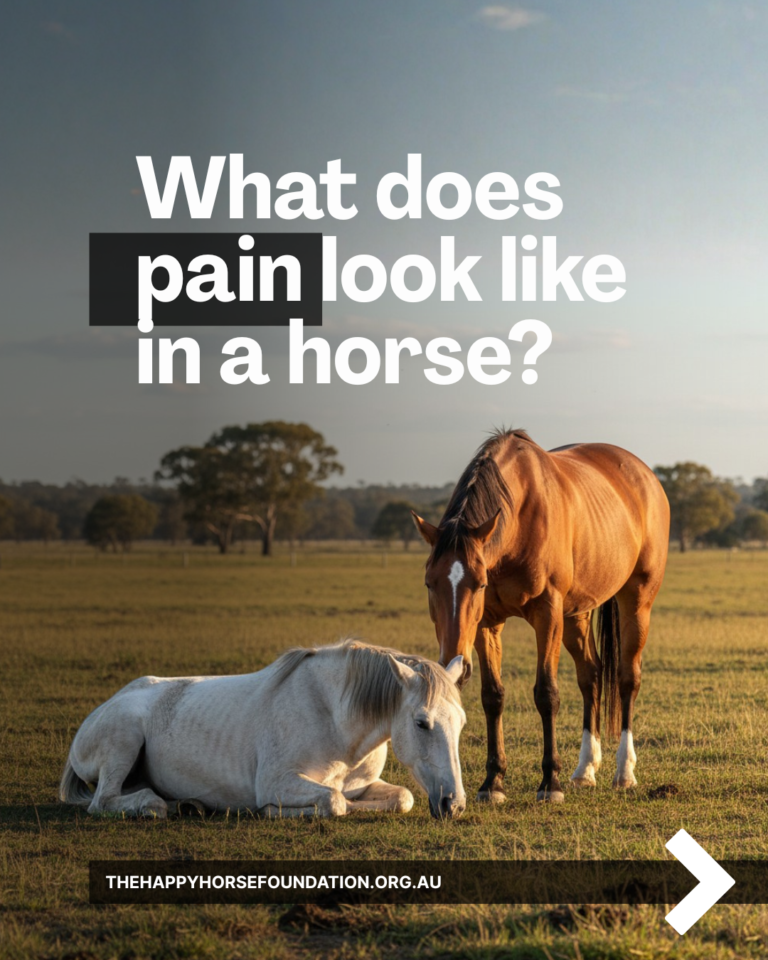
Pain ≠ Behaviour
Pain ≠ Behaviour Why everyday labels often hide discomfort in horses Pain in horses rarely looks the way we expect it to. It doesn’t always…
Read More
Gastric Ulcers in Horses
Gastric Ulcers in Horses How management, behaviour and biology interact to create ulcer risk How the horse’s digestive system functions A horse’s gastrointestinal tract is…
Read More