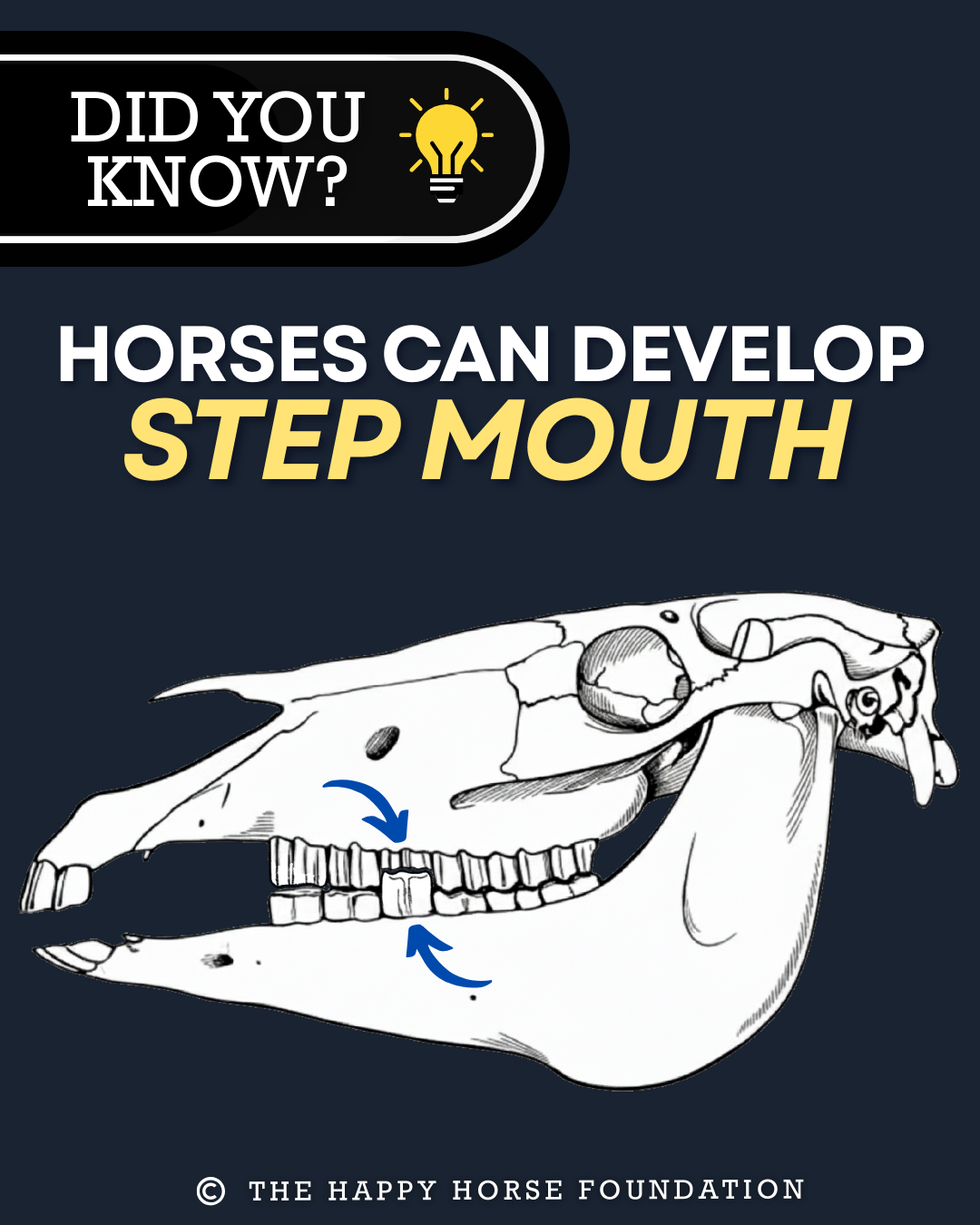
Did you know? Horses can develop step mouth!
Step mouth is a dental abnormality where one cheek tooth (molar) becomes much longer than the others, creating a ‘step’ in the otherwise level grinding surface.
This often develops gradually over time, especially in older horses with missing or damaged teeth, or when an opposing tooth is unable to erupt properly – leaving nothing to wear it down.
Without the natural opposing pressure, the tooth continues to erupt and overgrow, which can cause:
- Disruption of the normal grinding action.
- Jaw restriction and difficulty moving the mouth side-to-side.
- Pain, leading to resistance of handling, bitting, or riding.
- Weight loss.
- Quidding (dropping feed).
The foundation of preventing step mouth is a natural fibre-rich diet. Horses need to graze and chew fibrous forage for many hours each day. This constant, balanced wear helps keep opposing teeth in check. Diets lacking long-stem roughage, or those overly reliant on concentrates, reduce natural grinding time and make dental imbalances more likely.
Regular dental exams remain essential – particularly in horses that have already lost or fractured teeth. In these cases, careful floating (filing) may be required to shorten an overgrown tooth and restore comfortable jaw movement. Still, the priority should always be to provide abundant roughage and natural grazing opportunities.
By putting diet and natural wear first – and using dentistry as a complementary tool – we can help prevent painful imbalances like step mouth and maintain healthy chewing surfaces throughout a horse’s life.
The Happy Horse Foundation is a registered charity with the Australian Charities and Not-for-profit Commission

The Happy Horse Foundation is a registered charity with the Australian Charities and Not-for-profit Commission

The Myth of the ‘Good Doer’ or ‘Easy Keeper’
The Myth of the ‘Good Doer’ or ‘Easy Keeper’ The Myth of the ‘Good Doer’ or ‘Easy Keeper’ Why everyday labels often hide discomfort in…
Read More
Pain ≠ Behaviour
Pain ≠ Behaviour Why everyday labels often hide discomfort in horses Pain in horses rarely looks the way we expect it to. It doesn’t always…
Read More
Gastric Ulcers in Horses
Gastric Ulcers in Horses How management, behaviour and biology interact to create ulcer risk How the horse’s digestive system functions A horse’s gastrointestinal tract is…
Read More