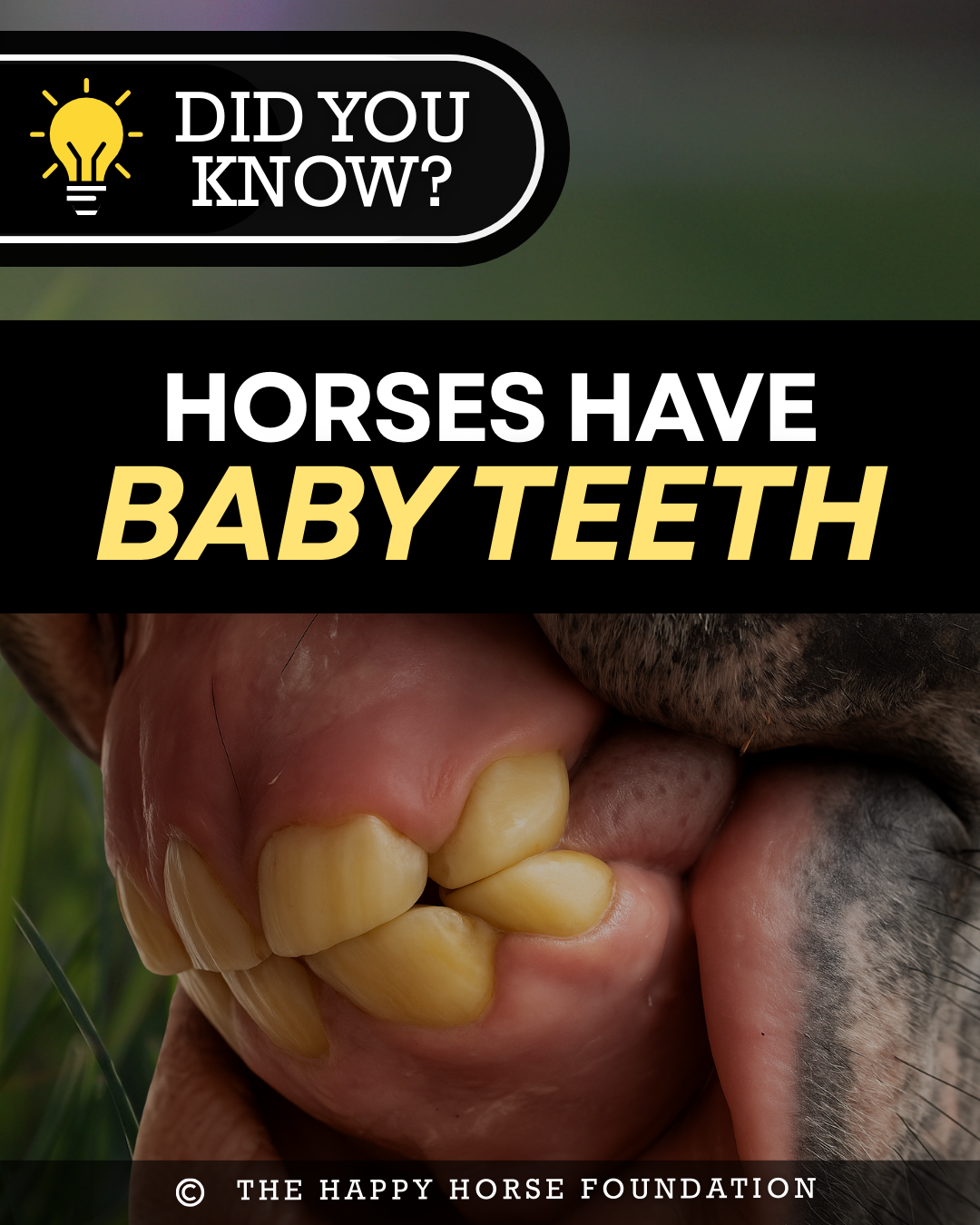
Did you know young horses have baby teeth?
Just like children, horses are born with deciduous (baby) teeth that make way for their permanent (adult) set. Foals start to erupt their first incisors within a week of birth, and by around 6-9 months they have a full set of 24 baby teeth. These smaller, whiter teeth are designed to help them graze and chew early forage.
As the horse matures, permanent (adult) teeth gradually erupt and push out the baby teeth. The old deciduous crowns are shed as thin, cap-like pieces – often called “caps”. Most horses finish losing their caps between the ages of 2.5 and 5 years, depending on the tooth.
This natural process allows the horse to:
- Transition smoothly from baby to permanent teeth.
- Develop strong, functional molars and incisors for adult chewing.
- Maintain space in the jaw so permanent teeth align correctly.
But sometimes caps don’t shed properly and become “retained caps”.
These can cause problems such as:
- Mouth pain or sensitivity under a bit.
- Quidding (dropping partially chewed feed).
- Uneven wear or delayed eruption of permanent teeth.
Regular dental checks are essential during these years to spot retained caps, wolf teeth, or sharp enamel points before they interfere with nutrition or training.
By monitoring young horses’ mouths and ensuring caps shed correctly, we set the foundation for a lifetime of healthy, functional teeth.
The Happy Horse Foundation is a registered charity with the Australian Charities and Not-for-profit Commission

The Happy Horse Foundation is a registered charity with the Australian Charities and Not-for-profit Commission

The Myth of the ‘Good Doer’ or ‘Easy Keeper’
The Myth of the ‘Good Doer’ or ‘Easy Keeper’ The Myth of the ‘Good Doer’ or ‘Easy Keeper’ Why everyday labels often hide discomfort in…
Read More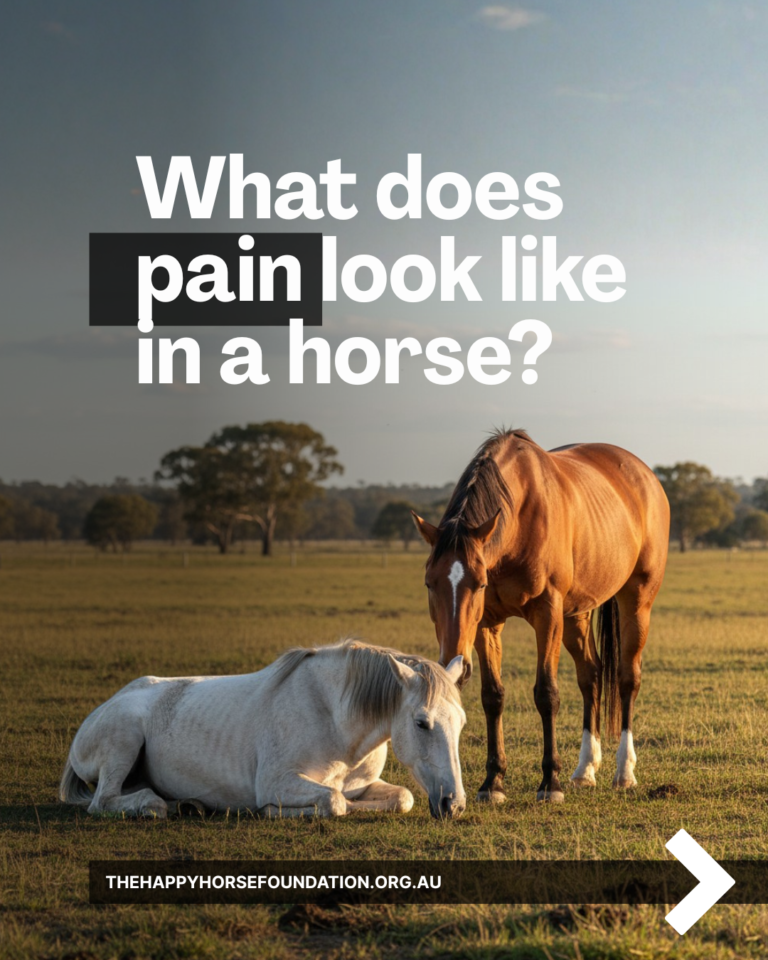
Pain ≠ Behaviour
Pain ≠ Behaviour Why everyday labels often hide discomfort in horses Pain in horses rarely looks the way we expect it to. It doesn’t always…
Read More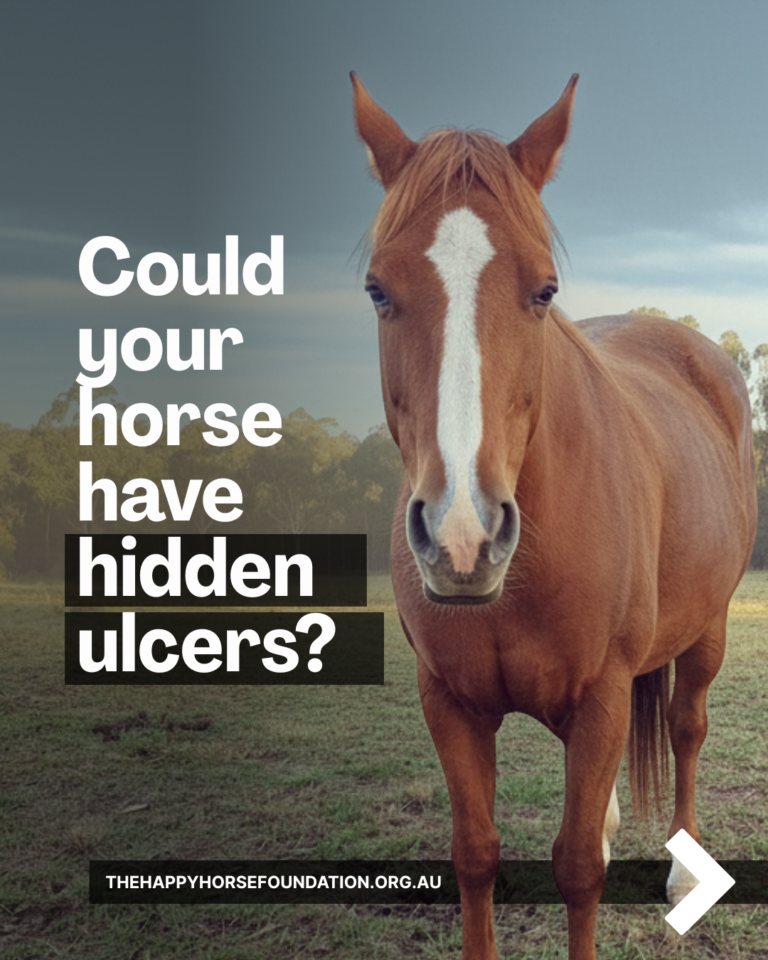
Gastric Ulcers in Horses
Gastric Ulcers in Horses How management, behaviour and biology interact to create ulcer risk How the horse’s digestive system functions A horse’s gastrointestinal tract is…
Read More