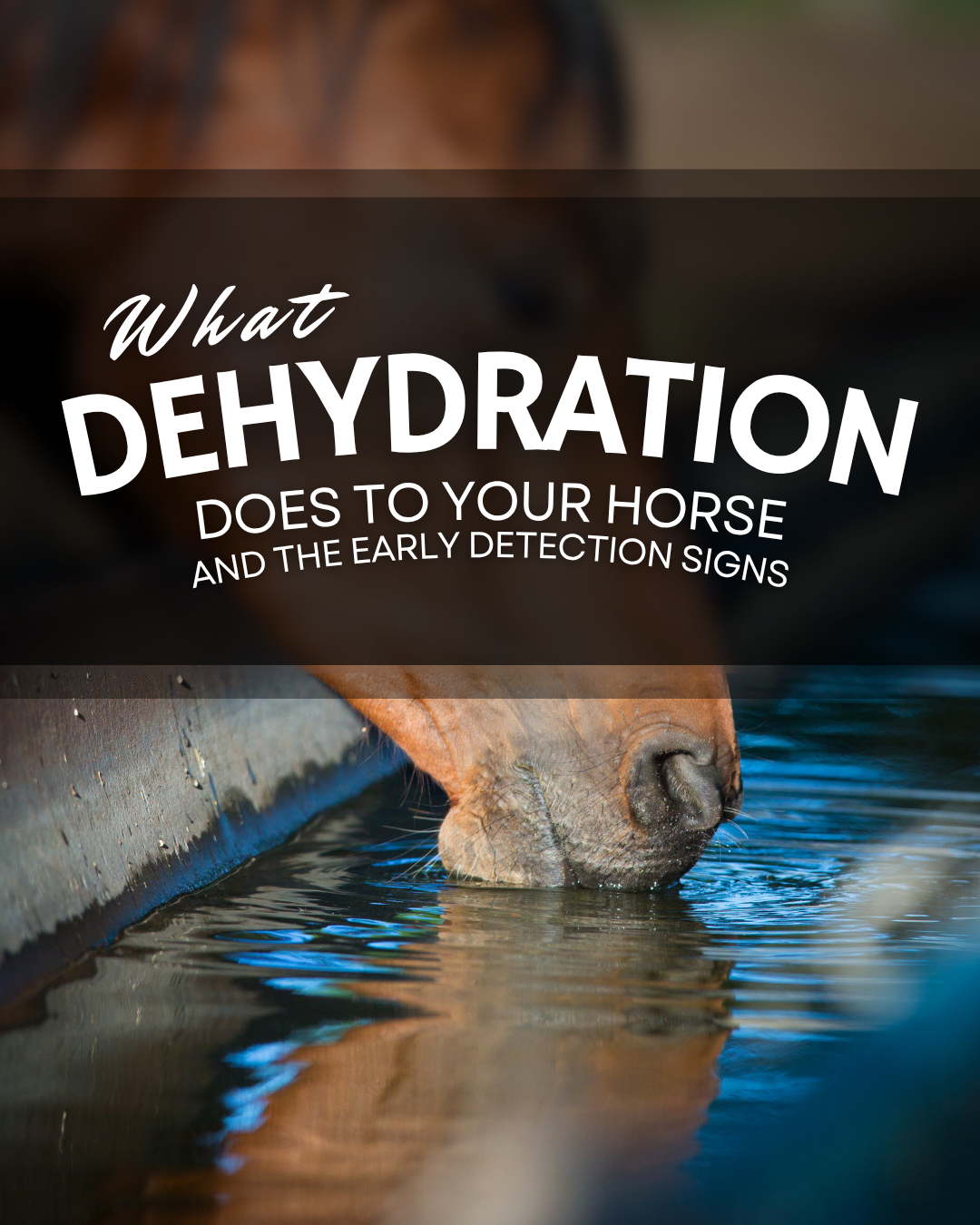
Dehydration in horses
Dehydration occurs when a horse loses more water than they consume.
It can develop rapidly in hot weather, after a change in diet, when taking certain medications or supplements, during travel, or following heavy exercise.
Water loss impacts every system in the body – reducing blood volume, thickening the blood, and impairing the transport of nutrients and waste.
Effects of dehydration
Digestive system:
Slows gut movement, increasing the risk of impaction colic.
Muscles:
Reduces strength, endurance, and performance; increases the likelihood of cramping.
Circulation and temperature regulation:
Makes it harder for the horse to cool down and transport oxygen efficiently.
Behaviour and appetite:
Dehydrated horses may appear dull, irritable, or unwilling to eat.
How to recognise early signs of dehydration
Skin pinch test:
Pinch the skin on the neck – if it takes longer than 2 seconds to return to normal, dehydration is likely.
Capillary refill time:
Press on the gums – healthy gums regain colour in 1–2 seconds. A delayed refill suggests poor circulation.
Dry or sticky gums:
Gums should be moist and pink; dryness or tackiness is a warning sign.
Other signs:
Dark, strong-smelling urine or reduced urination.
Lethargy or reduced performance.
Reduced manure output or very dry droppings.
Monitoring water intake daily – especially in horses on dry hay or in regular work – is one of the simplest ways to prevent dehydration.
Ensuring 24/7 access to clean, palatable water and supplementing with electrolytes when needed are key steps to keeping horses healthy and well-hydrated.
The Happy Horse Foundation is a registered charity with the Australian Charities and Not-for-profit Commission

The Happy Horse Foundation is a registered charity with the Australian Charities and Not-for-profit Commission