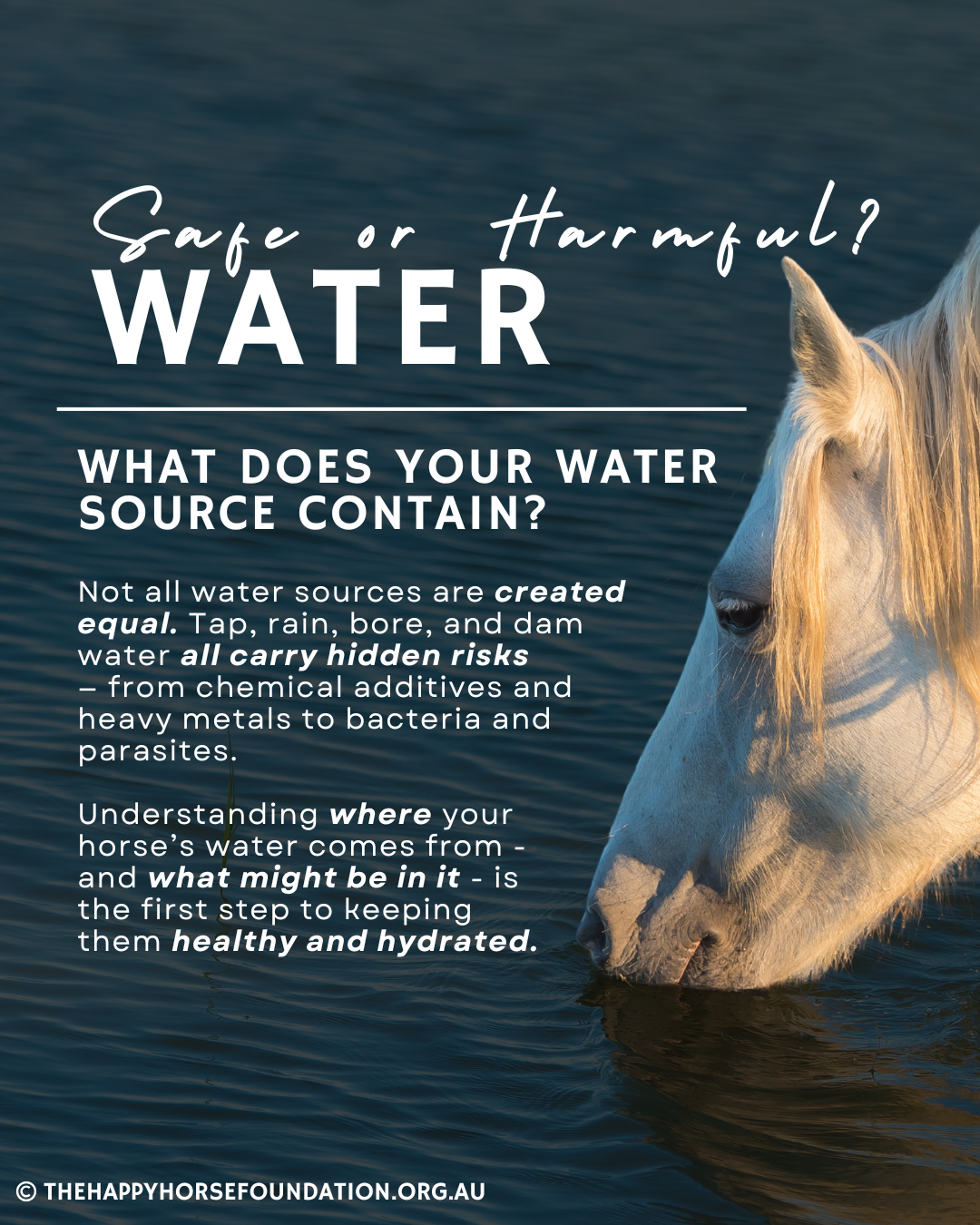
What is your horse really drinking?
Tap / Town Water
Mains water is chemically treated to meet human safety standards, but these treatments can still raise health concerns. Depending on the source and infrastructure, it may also contain contaminants such as PFAS, pesticide and herbicide residues, and heavy metals like lead.
Chlorine and other treatment chemicals alter taste and smell, which can discourage horses from drinking – particularly if they are not accustomed to it. Reduced intake increases the risk of dehydration and related health issues.
Mineral levels in town water vary by region and are influenced by the source, treatment process, filtration, and plumbing.
Rainwater
Rainwater collected in tanks is free from chemical treatment, but air pollution and environmental runoff can introduce pollutants – including PFAS (“forever chemicals”), pesticides, and other residues – before it is even collected.
Tank water can also be contaminated by dust, leaves, bird droppings, insects, or other debris entering from roof catchments or poorly sealed tanks. Without regular cleaning, bacteria, viruses, protozoa, and algae can quickly multiply, especially in warm weather.
Bore Water
Bore or well water is drawn from underground aquifers and can vary greatly in quality depending on depth, location, and surrounding land use.
These sources often contain naturally high levels of minerals such as iron, calcium, magnesium, or sulphur, which can affect taste, smell, and colour. In some areas, bore water may also contain heavy metals, salts, or fluoride at levels unsuitable for long-term consumption.
Chemical pollutants – including PFAS, nitrates, and pesticide residues – can enter groundwater through agricultural or industrial runoff. Bore water should be tested regularly, as mineral content and contamination risks change over time or during drought.
Dam / Creek / Pond Water
Natural surface water sources vary dramatically in quality with rainfall, size, temperature, stock numbers, and land use.
These sources are prone to contamination from manure, urine, decaying vegetation, and runoff carrying fertilisers, pesticides, or chemicals. They can also harbour bacteria, viruses, protozoa, and parasites.
In warm weather, stagnant water encourages algae growth, including toxic blue-green algae, which can be fatal. Heavy metals and other pollutants may also accumulate from agricultural or industrial runoff.
Regular water testing, fencing off sensitive areas, and providing a clean alternative supply are essential when horses rely on these sources.
Conclusion
The quality of your horse’s water directly affects their health, hydration, and wellbeing. Every source – tap, tank, bore, dam, creek, or rain – carries risks, from chemical additives and heavy metals to bacteria, parasites, and other pollutants.
A reliable filtration system – no matter the source – combined with regular testing and maintenance, is one of the simplest and most effective ways to ensure your horse always has access to clean, safe drinking water.
The Happy Horse Foundation is a registered charity with the Australian Charities and Not-for-profit Commission

The Happy Horse Foundation is a registered charity with the Australian Charities and Not-for-profit Commission